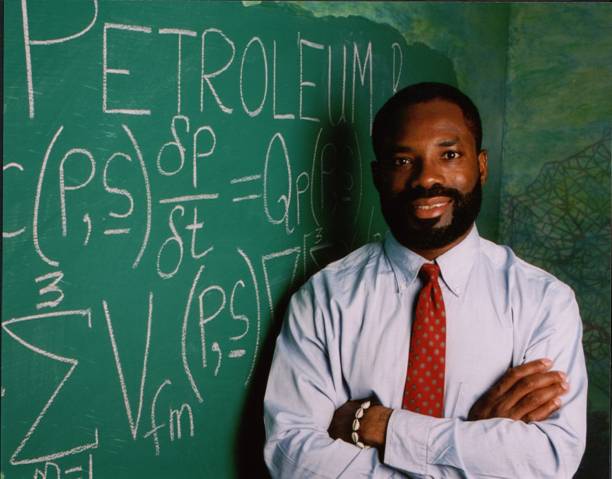
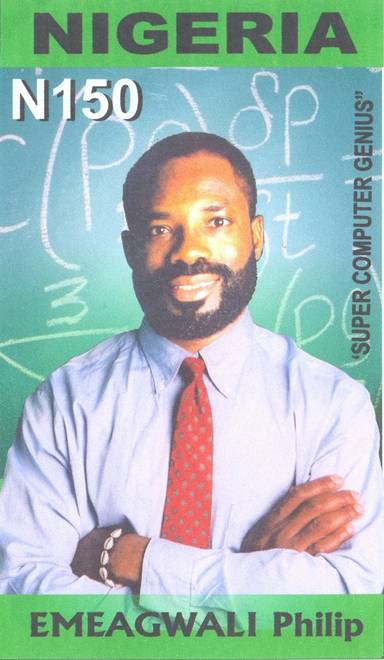
Let
Us Talk About
Collected
Speeches
with
Commentary
by Philip Emeagwali
CONTENTS[MSOffice1]
Foreword – One of the Great Minds of the Information Age
Preface –A Note to the Readers
Ideas, Not Money, Alleviate Poverty
Globalization Not New: Look at Slave Trade
How Do We Reverse the Brain Drain?
African History: Lost, Stolen or Strayed
I Believe I Can Fly
They Laughed When I Told Them … But Their Laughter Turned
to
Stunned Silence …[MSOffice2]
My Search for the Holy Grail of Immortality
My Search for the Lost Igbo Tribe
Why Is
My Search for the Holy Grail of Immortality
Globalization Not New; Look at Slave Trade
One Wife, One Child
Do I Believe in God?
Why Is Oil-Rich Nigeria So Poor?
Waiting for Oil Cargo
The Party's Over; The End of Oil
A Black Scientist Speaks About Racism
Am I the Anti-Christ?
Forgive Me, Father, for I Have Sinned!
An Emeagwali Photo Gallery
Chronology of Emeagwali’s Life
Afterword
One of Our Great Minds [MSOffice4]
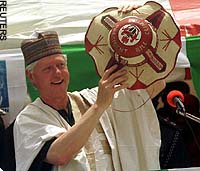
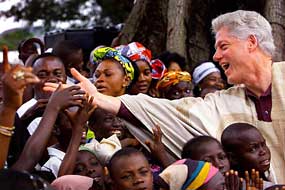
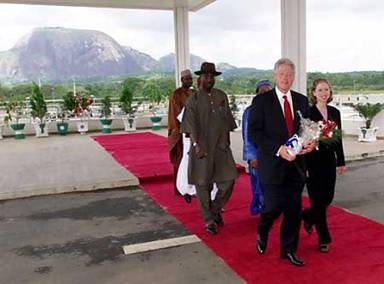
by Bill Clinton
“One of the great minds
of the Information Age
is a Nigerian American
named Philip Emeagwali.
He had to leave school
because his parents
couldn't pay the fees.
He lived in a refugee camp
during your civil war.
He won a scholarship
to university and went on
to invent a formula
that lets computers make
3.1 billion calculations
per second. (Applause.)
Some people call him
the Bill Gates of
(Laughter and applause.)
But what I want to say
to you is there is
another Philip Emeagwali
-- or hundreds of them --
or thousands of them
-- growing up in
I thought about it
when I was driving in
from the airport and
then driving around
to my appointments,
looking into the face
of children.
You never know
what potential
is in their mind and
in their heart;
what imagination they have;
what they have already
thought of and
dreamed of
that may be locked in
because they don't have
the means to take it out.
That's really what education is.
It's our responsibility
to make sure
all your children
have the chance
to live their dreams
so that
you don't miss
the benefit
of their contributions and
neither does the rest of the world.”
Ideas, Not Money, Alleviate Poverty
by Philip Emeagwali
Keynote speech by famed supercomputer pioneer
[
I once believed that capital was another word for money, the accumulated wealth of a
country or its people. Surely, I thought, wealth is determined by the money or
property in one’s possession. Then I saw a Deutsche Bank advertisement in the Wall Street Journal that proclaimed:
“Ideas are capital. The rest is just money.”
I was struck by the simplicity of such an eloquent
and forceful idea. I started imagining what such power meant for
If ideas are capital, why is
When African men and women of ideas, who will give
birth to new ideas, have fled to
The first annual report by J.P. Morgan Chase, a
firm with assets of 1.3 trillion dollars, reads: “The power of intellectual
capital is the ability to breed ideas that ignite value.” This quote is a
clarion call to African leaders to shift purposefully and deliberately from a
focus on things to a focus on information; from exporting natural resources to
exporting knowledge and ideas; and from being a consumer of technology to
becoming a producer of technology.
For
The intellectual capital needed to produce
products and services will lead to the path of poverty alleviation.
Intellectual capital, defined as the collective knowledge of the people,
increases productivity. The latter — by driving economic growth — alleviates
poverty, always and everywhere, even in
Those who create new knowledge are producing wealth,
while those who consume it are producing poverty. If you attend a Wole Soyinka’s production of Chinua Achebe’s “Things Fall
Apart,” you consume the knowledge produced by Soyinka
and Achebe as well as the actor’s production, much
like I consume the knowledge and production of Bob Marley’s through his
songs.
We will need wisdom, that which turns too much
information — or information overload — into focused power, not only to
process, but also to evaluate the overwhelming amount of information available
on the Internet. This wisdom will give us the competitive edge and enable us to
find creative solutions.
The
following story illustrates the difference between information and wisdom.
Twelve hundred years ago, in the city of
One day, Al-Khwarizmi
was riding a camel laden down with algebraic manuscripts to the holy city of
“My children, why are you crying?” he enquired.
“Our father, upon his death, instructed us to
divide his 17 camels as follows:
‘To my oldest son I leave half of my camels, my
second son shall have one-third of my camels, and my youngest son is to have
one-ninth of my camels.’”
“What, then, is your problem?” Al-Khwarizmi asked.
“We have been to school and learned that 17 is a
prime number that is, divisible only by one and itself and cannot be divided by
two or three or nine. Since we love our camels, we cannot divide them exactly,”
they answered.
Al-Khwarizmi thought for
a while and asked, “Will it help if I offer my camel and make the total 18?”
“No, no, no,” they cried.
“You are on your way to
“Go ahead, have my camel, and divide the 18 camels
amongst yourselves,” he said, smiling.
So the eldest took one-half of 18 — or nine
camels. The second took one-third of 18 — or six camels. The youngest took
one-ninth of 18 — or two camels. After the division, one camel was left: Al-Khwarizmi’s camel, as the total number of camels divided
among the sons (nine plus six plus two) equaled 17.
Then Al-Khwarizmi asked,
“Now, can I have my camel back?”
These young men had information about prime
numbers, but they lacked the wisdom to use the information effectively. It is
the manipulation of information to accomplish seemingly impossible purposes
that defines true wisdom.
Today, we have ten billion pages of information
posted on the Internet — more than enough to keep us
busy the rest of our lives, and new information is being added daily. More
information has been created in the last 100 years than in all of the previous
100,000 years combined. We need the wisdom to sift through and convert these
billions of pages into information riches.
The genius of Al-Khwarizmi
was not in his mathematical wizardry or even his book knowledge: It was in his
experiential knowledge — his big-picture, right-brain thinking; creativity;
innovation; and wisdom. It was his wisdom to add a camel to make the total 18
and still get his camel back.
Prime numbers are to whole numbers what the laws
of physics are to physics. Twenty years ago, I used an Al-Khwarizmi approach to solve a notoriously difficult problem
in physics. I added inertial force, which enabled me to reformulate
Like
Al-Khwarizmi, I derived my 18 equations
through out-of-the-box
thinking in an in-the-box world, adding my metaphorical camel:
inertial force. In other words, I applied wisdom to known knowledge to generate
intellectual capital.
Unless
Philip Emeagwali was voted history's greatest scientist (#1)
of African descent — and the 35th greatest African of all time — in a survey
for the September 2004 issue of the London-based New African magazine. He won the 1989 Gordon Bell Prize, the Nobel
Prize of supercomputing. For his speech
video recordings, visit emeagwali.com.
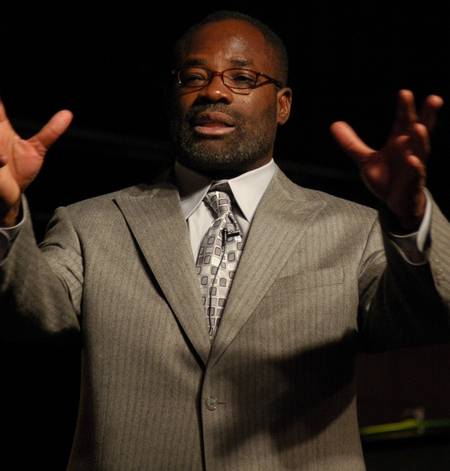
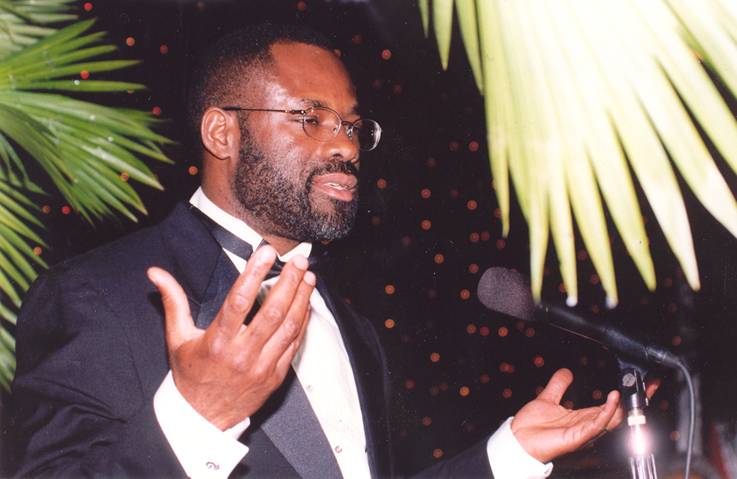
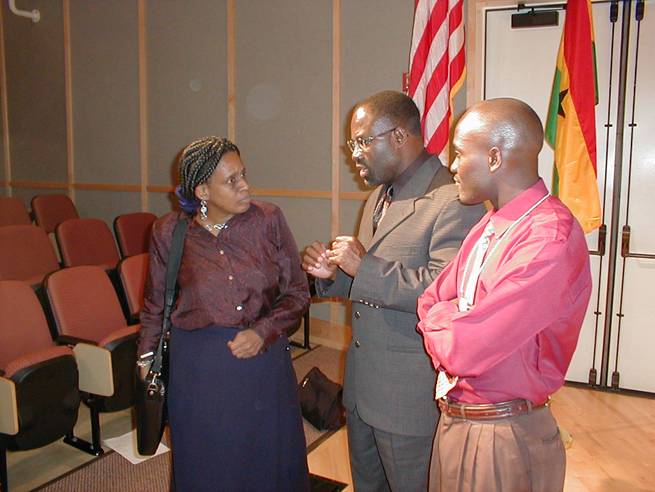
Philip Emeagwali delivering his speech at the
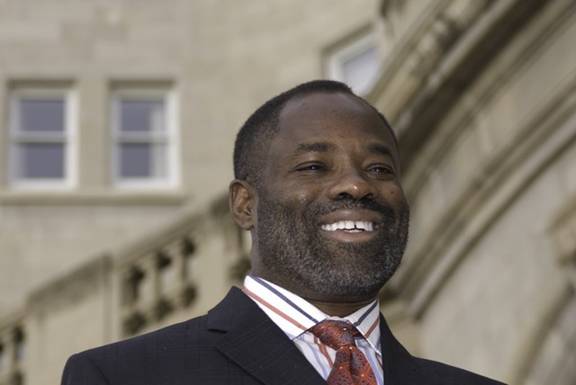 Philip Emeagwali at a Meet & Greet
with African students at the
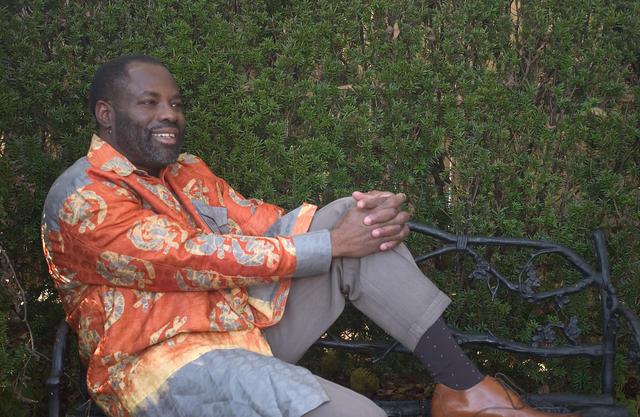
Philip Emeagwali at a Meet & Greet
with African students at the
Globalization Not New;
Look at Slave
Trade
Delivered by Philip Emeagwali on
Globalization - or the ability of many people, ideas and
technology to move from country to country - is not new. In
The early missionaries saw African culture and religion as a
deadly adversary and as an evil that had to be eliminated.
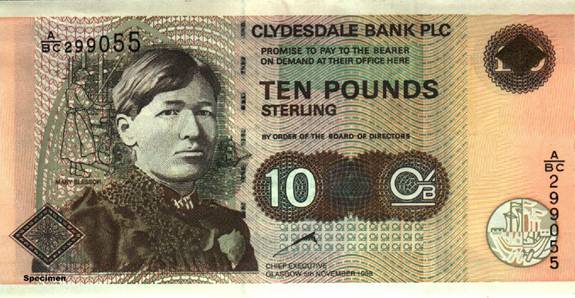
In 1876, a 27-year-old missionary named Mary Slessor
emigrated from
For her efforts in trying to covert the people of
The introduction to Mary Slessor’s
biography titled: “White Queen of the Cannibals” is revealing:
“On the west coast of
“They're bad people, aren't they, Mother?” asked little Susan.
“Yes, they are bad, because no one has told them about Jesus,
the Saviour from sin, or showed them what is right
and what is wrong.”
These opening words clearly show that Mary Slessor
came to
She told us we worshipped an inferior god and that we belonged
to an inferior race.
She worked to expel what she described as “savagism” from our
culture and heritage and to encourage European “civilization” to take root in
We accepted the mission schools which were established to
enlighten us, without questioning the unforeseen costs of our so-called
education.
These mission schools plundered our children’s self-esteem by
teaching them that, as Africans they were inherently “bad people.”
Our children grew up not wanting to be citizens of
I speak of the price Africans have paid for their education and
“enlightenment” from personal experience.
I was born “Chukwurah,” but my
missionary schoolteachers insisted I drop my “heathen” name. The prefix “Chukwu” in my name is the Igbo word for “God.” Yet,
somehow, the missionaries insisted that “Chukwurah”
was a name befitting a godless pagan.
The Catholic Church renamed me “Philip,” and Saint Philip became
my patron and protector, replacing God, after whom I was named.
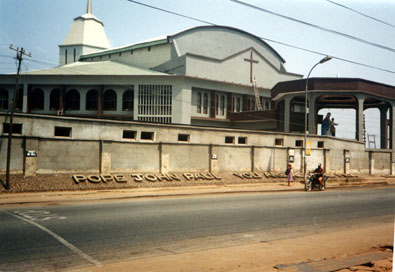
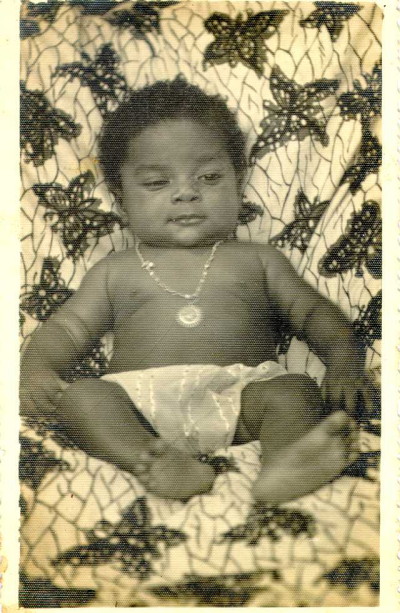
I have to argue that something more than a name has been lost.
Something central to my heritage has been stripped away.
This denial of our past is the very antithesis of a good
education.
Our names represent not only our heritage, but connect us to our
parents and past.
As parents, the names we choose for our children reflect our
dreams for their future and our perceptions of the treasures they represent to
us.
My indoctrination went far deeper than just a name. The
missionary school tried to teach me that saints make better role models than
scientists.
I was taught to write in a new language. As a result, I became
literate in English but remain illiterate in Igbo - my native tongue.
I learned Latin - a dead language I would never use in the modern
world - because it was the official language of the Catholic Church, which
owned the schools I attended.
Today, there are more French speakers in
There are more English speakers in
There are more Portuguese speakers in
The Organization of African Unity never approved an African
language as one of its official languages.
We won the battle of decolonizing our continent, but we lost the
war on decolonizing our minds.
Many acknowledge that globalization shapes the future, but few
acknowledge that it shaped history, or at least the world’s perception of it.
Fewer acknowledge that globalization is a two-way street.
Africa was a colony, but it is also a key
contributor to many other cultures, and the cornerstone of today’s society.
The world’s views tend to overshadow and dismiss the value and
aspirations of colonized people. Again, I must impart my own experiences to
illustrate this point.
I grew up serving as an altar boy to an Irish priest. I wanted
to become a priest, but ended up becoming a scientist. Religion is based on
faith, while science is based on fact and reason - and science is neutral to
race. Unfortunately, scientists are not neutral to race.
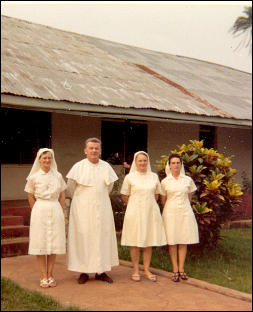
Take, for example, the origin of AIDS, an international disease.
According to scientific records, the first person to die from AIDS was a
25-year-old sailor named David Carr, of
Carr died on
The “unknown disease” that killed David Carr was reported in The
Lancet on
Based upon scientific reason, researchers should have deduced
that AIDS originated in
Instead, the white scientific community condemned the British
authors of those revealing articles for daring to propose that an Englishman
was the first known AIDS patient.
If these scientists were neutral to race, their data should have
led them to the conclusion that Patient Zero lived in
If these scientists were neutral to race, they should have
concluded that AIDS had spread from
Instead, they proposed the theory that AIDS originated in
Even history has degraded our African roots. We come to the
And we learn history filtered through the eyes of
Some of us complained that
Some of us complained that
George Bush understood
Some will even argue that schools play a significant role as
federal indoctrination centers used to convince children during their formative
years that whites are superior to other races. Fela Kuti, who detested indoctrination, titled one of his
musical albums: “Teacher Don't Teach Me Nonsense.”
It scares me that an entire generation of African children is
growing up brainwashed by
Our children are growing up idolizing American heroes with whom
they cannot personally identify.
We need to tell our children our own stories from our own
perspective.
We need to decolonize our thinking and examine the underlying truths
in more than just movies.
We need to apply the same principles to history and science, as
depicted in textbooks.
Look at African science stories that were retold by European
historians; they were re-centered around
The earliest pioneers of science lived in
Science and technology are gifts ancient
Yet, our history and science textbooks, for example, have
ignored the contributions of Imhotep, the father of
medicine and designer of one of the ancient pyramids.
The word “science” is derived from the Latin word “scientia” or “possession of
knowledge.” We know, however, that knowledge is not the exclusive
preserve of one race, but of all races.
By definition, knowledge is the totality of what is known to humanity. Knowledge is a body of information and truth, and the
set of principles acquired by mankind over
the ages.
Knowledge is akin to a quilt, the latter consisting of several layers held together by stitched designs and comprising patches of many colors.
The oldest patch on the quilt of science belongs to the African
named Imhotep.
He was the world’s first recorded scientist, according to the prolific American
science writer Isaac Asimov.
The oldest patch on the quilt of mathematics belongs to another
African named Ahmes. Isaac Asimov also credited Ahmes as being the world’s first author of a mathematics textbook.
Therefore, a study of history of science is an effort to
stitch together a quilt that has life, texture and color. African historians
must insert the patches of information omitted from books written by European
historians.

There are many examples of the mark Africans have made on world history.
Americans are surprised when I tell them Africans built both
According to the
Because the White House and Capitol are the two most visible symbols of American democracy, it is important to
inform all schoolchildren in our globalized world
that these institutions are the results of the sweat and toil of mostly African
workers.
This must also be an acknowledgement
of the debt

Similarly, discussions of globalization should credit
those Africans who left the continent and helped build other nations throughout
the world - most nations on Earth.
Africans who have made contributions in Australia, in
Russia, and in Europe must be acknowledged so our children can have heroes with
African roots - so they can know their own roots and be proud of them.
The enormous contributions of Africans to the development and
progress of other nations has gone unacknowledged.
We have yet to acknowledge, for example, that St. Augustine, who wrote the greatest
spiritual autobiography of all time, called “Confessions of St. Augustine,” was
an African; that three Africans became pope;
that Africans have lived in Europe
since the time of the Roman Empire;
that Septimus Severus, an
Emperor of Rome, was an African; and that the reason Beethoven was called “The
Black Spaniard” was because he was a mulatto of African descent.
Why are we reluctant to acknowledge the contributions and
legacies of our African ancestors?
We cannot inspire our children to look toward the future without
first reminding them of their ancestors’ contributions.
Look at the long struggle of African Australians, who recently became
citizens with rights on their native continent.
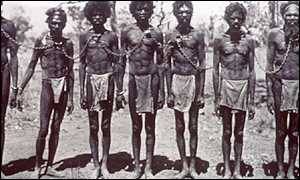
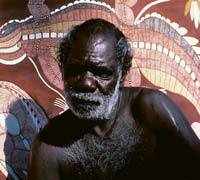
Africans have been living in
According to CNN, African Australians were not recognized as
human beings prior to 1967. They “were governed under flora and fauna laws.”
African Australians were, in essence, governed by plant and animal laws.
For many years, African Australians were described as the “invisible people.” In fact, the first
whites to settle in
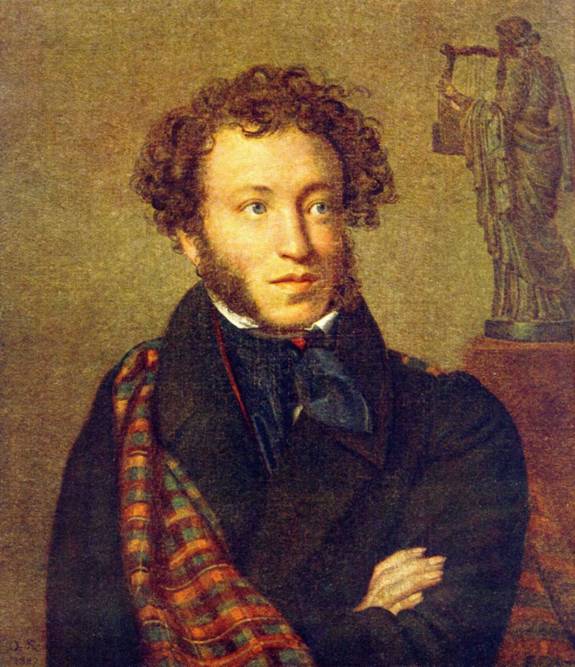
The contributions of Africans to
Russians proclaim Pushkin as their “national poet,” the “patriarch of Russian literature” and
the “Father of the Russian language.”
In essence, Pushkin is to
I was asked to share today the story behind my supercomputer
discovery. It would require several books to tell the whole story, but I will
share a short one that I have never told anyone.
The journey of discovery to my supercomputer was a titanic,
one-man struggle. It was like climbing
Because I was traumatized by the racism I had encountered in
science, I maintained a self-imposed silence on the supercomputer discovery
that is my claim to fame.
I will share with you a supercomputing insight that even the
experts in my field did not know then and do not know now.
In the 1980s, supercomputers could perform only millions of
calculations per second and, therefore, their timers were designed to measure
only millions of calculations per second.
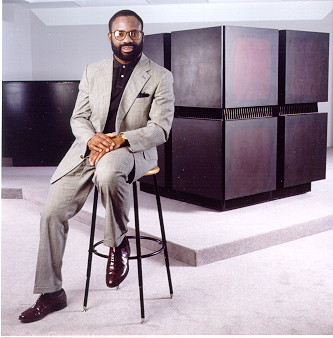
But I was performing billions of calculations per second and
unknowingly attempting to time it with a supercomputer timer, which was
designed to measure millions of calculations per second.
I assumed my timer could measure one-billionth of a second. It
took me two years to realize my timer was off a thousandfold.
I was operating beyond a supercomputer’s limitations, but I did
not know it. The supercomputer designers did not expect their timers to be used
to measure calculations at that rate.
I almost gave up because I could not time and reproduce my
calculations which, in turn, meant I could not share them, two years earlier,
with the world.
After years of research, my supercomputer’s timer was the only
thing stopping me from getting the recognition I deserved.
I realized the timer was wrong, but I could not explain why. I
spent two years mulling over why the timer was wrong.
It took two long and lonely years to discover why I could not
time my calculations.
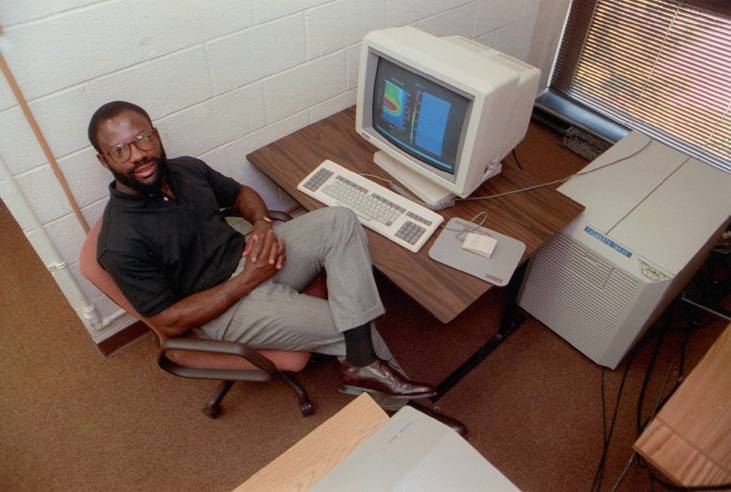
My 3.1 billion calculations per second, which were then the
world’s fastest, were simply too fast for the supercomputer’s timer.
What I learned from that experience was not to quit when faced
with an insurmountable obstacle – and that believing in yourself
makes all the difference.
I learned to take a step backward and evaluate the options:
Should I go through, above, under, or around the obstacle?
Quitting, I decided, was not an option. Indeed, the old saying
is true: When the going gets tough, the tough get going.
Looking back, I learned that most limitations in life are
self-imposed. You have to make things happen, not just watch things happen.
To succeed, you must constantly reject complacency.
I learned I could set high objectives and goals and achieve
them.
The secret to
my success is that I am constantly striving for continuous improvements in my
life and that I am never satisfied with my achievements.
The myth that a genius must have above-average intelligence is
just that, a myth.
Geniuses are people who learn to create their own positive
reinforcements when their experiments yield negative results. Perseverance is
the key.
My goal was to go beyond the known, to a territory no one had
ever reached.
I learned that if you want success badly enough and believe in
yourself, then you can attain your goals and become anything you want in life.
The greatest challenge in your life is to look deep within
yourself to see the greatness that is inside you, and those around you.
The history books may deprive African children of the heroes
with whom they can identify, but in striving for your own goals, you can become
that hero for them – and your own hero, too.
I once believed my supercomputer discovery was more important
than the journey that got me there.
I now understand the journey to discovery is more important than
the discovery itself; that the journey also requires a belief in your own
abilities.
I learned that no matter how often you fall down, or how hard
you fall down, what is most important is that you rise up and continue until
you reach your goal.
It’s true, some heroes are never recognized, but what’s
important is that they recognize themselves.
It is that belief in yourself, that focus, and that inner
conviction that you are on the right path, that will get you through life’s
obstacles.
If we can give our children pride in their past, then we can
show them what they can be and give them the self-respect that will make them
succeed.

How Do We Reverse the Brain Drain?
Delivered by Philip Emeagwali on

“I read with tears in my eyes the brain drain article, Oh good lord!”
---
Gboyega
“I was in the car and my heart shed tears for the revelations before me.”
--- Tope Ayedun,
“I have never come across such a speech concentrated on solving the
problem of
“Your article is the most inspirational document I have ever come across
my whole life.“ --- Born in
“I am of the view that the issues raised in this speech should form the
basis of discussion and brainstorming at the next Federal Executive Council
meeting in
“I was marvelled not about the content on its
own but the way and manner the note was delivered.” --- Adisa,Saheed Adedeji
“Sir, I must say that your speech on that faithful day have enable me
rediscover myself, and also reminds me that Africa has great potentials that
can make Africa rise to its glory.” --- Sunday
Isoni
“Truly a powerful speech that brings to reality the truth and the actual
effect of brain drain.” --- Wallace Ngugi,
“We need more people like you to look up to and speak and advice on the
way forward.” --- Chibuzo Amaefule.
For 10 million
African-born emigrants, the word “home”
is synonymous with the
Personally,
I have lived continuously in the
On
the day I left
But
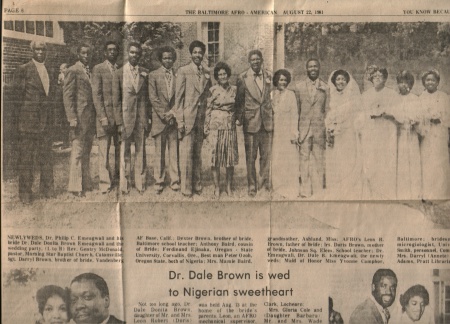
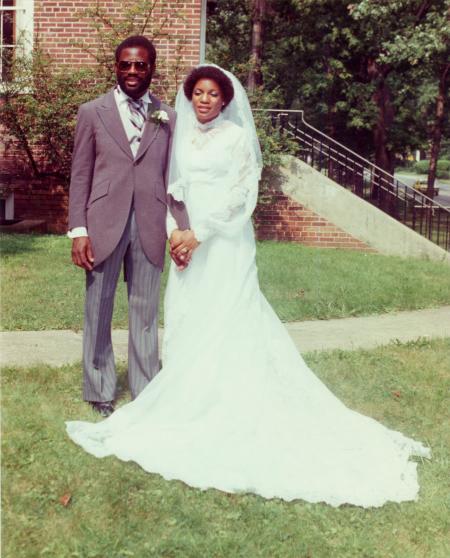
25 years ago, I fell in love with an American girl, married her three years
later, and became eligible to sponsor a Green Card visa for my 35 closest
relatives, including my parents and all my siblings, nieces and nephews.
The
story of how I brought 35 people to the
We
came to the
Ten
million Africans now constitute an invisible nation that resides outside
Although the African
Union does not recognize the African Diaspora as a nation, the International
Monetary Fund (IMF) acknowledges its economic importance. The IMF estimates
the African Diaspora now constitutes the biggest group of foreign investors in
Take
for example
What
few realize is that Africans who immigrate to the
Again,
if you do the math, you will realize that the African professional remitting
$300 per month to
On
a relative scale, that means for every $300 per month a professional African
sends home, that person contributes $12,000 per month to the
Of
course, the issue more important than facts and figures is eliminating
poverty in
Real
wealth cannot be measured by money, yet we often confuse money with wealth.
Under the status quo,
Ask
someone who is ill what “wealth” means, and you will get a very different
answer than from most other people.
If
you were HIV-positive, you would gladly exchange one million dollars to become
HIV-negative.
When
you give your money to your doctor, that physician helps you convert your money
into health - or rather, wealth.
Money
cannot teach your children. Teachers can. Money cannot bring electricity to
your home. Engineers can. Money cannot cure sick people. Doctors can.
Because it is only a nation’s human capital
that can be converted into real wealth, that human capital is much more
valuable than its financial capital.
A
few years ago,
I also speak from my family experiences.
After contributing 25 years to Nigerian society as a nurse, my father retired
on a $25-per-month pension.
By comparison, my four sisters each earn
$25 per hour as nurses in the
The “brain drain” explains, in part, why
affluent Africans fly to
Furthermore, because a significant
percentage of African doctors and nurses practice in
A recent World Bank survey shows that African
universities are exporting a large percentage of their graduating manpower to
the
While these 70,000 skilled Africans are
fleeing the continent in search of employment and decent wages, 100,000 skilled
expatriates who are paid wages higher than the prevailing rate in
In
In
a pre-independence day editorial, the Vanguard (
My
answer is this:
During colonial rule,
As a point of comparison, the
Our African homelands have paid an
extraordinary price for their lack of domestic technological knowledge.
Because of that lack of knowledge, since it gained independence in 1960,
Because of that lack of knowledge,
Because of that lack of
knowledge,
Knowledge is the engine that drives economic growth, and
Reversing the “brain drain” will increase
Can the “brain drain” be reversed? My answer is: yes. But in order for it to happen, we must try something different.
At this point, I want to inject a new idea
into this dialogue. For my idea to work, it requires that we tap the talents
and skills of the African Diaspora. It requires that we create one million
high-tech jobs in
I know you are wondering: How can we move
one million jobs from the
It can be done. In fact, by the year
2015 the U.S. Department of Labor expects to lose an estimated 3.3 million call center jobs to developing nations.
In this area, what we as
Africans need to do is develop a strategic plan – one that will persuade
multinational companies that it will be more profitable to move their call
centers to nations in Africa instead of India.
These high-tech jobs include those in call
centers, customer service and help desks – all of which are suitable for
unemployed university graduates.
The reason these jobs could now emerge in
If
Again, we have a rare and unique window of
opportunity to convert projected American job losses into
However, aggressive action must be taken
before this window of opportunity closes.
Therefore, we need to determine the cost
savings realized by outsourcing call center jobs to
A typical call center employee might be a
housewife using a laptop computer and a cell phone to work from her home. As
night settles and her children go to bed, she could place a phone call to
An American answers her call and she says,
“Good morning, this is Zakiya.” Using a standard,
rehearsed script, she tries to sell an American product.
Now that
I will give one more example of how thousands
of call center jobs can be created in
It is well known that
By comparison, I believe it would cost only
$10 in African labor (including the 6 cents per minute phone call) to collect
an outstanding balance of $50.
Earlier,
the organizers of this Pan African Conference gave me a note containing eleven
questions.
The
first was: Do skilled Africans have the moral obligation to remain and work in
I
believe those with skills should be encouraged and rewarded to stay, work, and
raise their families in
The
second question was: Should skilled African emigrants be compelled to return to
I
believe controlling emigration will be very difficult. Instead, I recommend the
United Nations impose a “brain gain tax” upon those nations benefiting from the
“brain drain.”
Each
year, the
The
U.S. Internal Revenue Service (IRS), working in tangent with the Immigration
and Naturalization Service (INS), could be required to credit one month’s
salary, each year, to the country of birth of each immigrant.
Already,
the IRS allows
The
third question was: Why don’t we encourage unemployed Africans to seek
employment abroad?
Put differently, if all the nurses and
doctors in
If we encourage 8 million talented Africans
to emigrate, what will we encourage their remaining 800 million brothers and
sisters to do?
The
fourth question was: Should we blame the African Diaspora for
Yes,
the Diaspora should be blamed in part, because the absence it’s created has diminished
the continent’s intellectual capital and thus created the vacuum enabling
dictators and corruption to flourish.
The
likes of Idi Amin, Jean-Bedel Bokassa and Mobutu Sese Seko would not be able to
declare themselves president-for-life of nations who have a large, educated
middle class.
The
fifth question was: Should we not blame
It
becomes a vicious circle: the flight of intellectual capital increases the
flight of financial capital which in turn increases again the flight of
intellectual capital.
Leadership
is a collective process, and “brain drain” reduces the collective brainpower
needed to fight corruption and mismanagement.
For
example, the leadership of the Central Bank of
The
bank’s Governor-General did not go on a hunger strike. He did not report the
robbery to the police. He did not file a lawsuit.
Had
they the intellectual manpower to counter corruption, the results would have
been very different.
The
sixth question was: Is it
possible to achieve an African renaissance?
Because
by definition, a renaissance is the revival and flowering of the arts,
literature and sciences, it must be preceded by a growth in the continent’s
intellectual capital, or the collective knowledge of the people.
The best African
musicians live in
The
seventh question was: For how long has the “brain drain” problem existed?
A
common misconception is that the African “brain drain” started 40 years ago.
In
reality, it actually began ten times that long. Four hundred years ago, most
people of African descent lived in
Contrary
to what people believed,
At
the end of colonial rule, skilled Europeans fled the continent. Skilled
Africans started fleeing the continent in the 1970s, 80s, and 90s. The result
was the widespread rise of despotic rulers.
The
eighth question was: Is "brain drain" a form of modern slavery?
By
the end of the 21st century, people will have different
sensibilities and will describe it as modern day slavery.
In
the 19th century, which was an Agricultural Age, the
In
the 21st century, which is an Information Age, the
The
ninth question was: Do you believe that the “brain drain” can be reversed?
As
I stated earlier, “brain drain” is a complex and multidimensional problem that
can be reversed into “brain gain.”
The
tenth question was: Can we blame globalization as a cause of brain drain?
Globalization
began 400 years ago with the trans-Atlantic slave trade that brought the
ancestors of 200 million Africans now living in the
Overall,
globalization is a force that is denationalizing the wealth of developing
nations. Economists have confirmed that the rich nations are getting richer
while the poor ones are getting poorer.
We
also know that the globalization process is increasing the foreign debts of
developing nations, accelerating the flight of financial and intellectual
capital to western nations.
The
economics of offshoring will force multinational
corporations to outsource to developing nations where lower wages prevail.
To
remain competitive and profitable, companies will be forced to reduce costs by
hiring five-dollars-an-hour computer programmers living in Third World
countries and lay off expensive American programmers that demand $50 an hour.
In
the long term, offshoring will reverse the flight of
financial and intellectual capital from western nations to the
The
eleventh question was: Why have I lived in the
I
long to visit the motherland, but I must confess that when
The
reason is that I work on creating new knowledge that could be used to redesign
supercomputers. The most powerful supercomputers cost $120 million each
and
New
knowledge must precede new technological products and the supercomputer of
today will become the personal computer of tomorrow.
And
so to answer your question: even though I reside in the U.S. the knowledge that
I created is now materializing into better personal computers purchased by
Africans.
Finally, millions of high-tech jobs can be
performed from
Doing so will enable us to create a brain
drain from the
African History:
Lost, Stolen or Strayed
Delivered
by Philip Emeagwali at Arizona State University West,
“They have been stealing the glory and history
of
“My name is Louis. I'm a
Senegalese living in
upset and proud reading somethings I learn
on your site about
the black mathematicians Euclid ... I wonder: How many
secrets like this have we lost?”
“The essay 'African history lost stolen or strayed' hit me in
the gut. The story is truly greater than the warrior. The Igbo extol the
primacy of language but somewhere in our journey we dropped the ball. We became
enraptured by the three dimensionality of contemporary experience and forgot
that language is not just descriptive but more importantly, that language is
deployable. Spin is not only employed during political campaigns, it is the
currency of daily living. The picture of the white Emeagwali
and the chickens says it all. Right before our own eyes.
The spin. Imagine what has been done over the course
of millennia. Thank you so much.” --- Obi Nwachukwu
When I was ten years old, living in
"The story or the warrior,
which is mightier?"
"The warrior!" I replied."
My father shook his head in disagreement.
"The story. The story is mightier than the
warrior," he said to me.
"How can that be?" I asked him.
"The story lives on long after the warrior has died,"
he explained.
This month is Black History Month. We celebrate it by telling
stories of the contributions of black Americans to
Also, today is President's Day. We celebrate it by telling stories
of the contributions of American presidents to
We tell stories about Thomas Jefferson, the third president of
the
Jefferson wrote, "All men are created equal." But he
meant, "All white men are created equal."
In his one and only published book, called "Notes on
Euclid wrote his book, called the "The Elements,"
2,300 years ago. It is the second most reprinted book in history. It is second
only to the Bible. And
To the ancients,
"What shall I profit by learning these difficult
things?"
"Give this boy a penny, since he must make a profit out of
what he learns."
Because The Elements
was notoriously difficult to understand,
He believed that only people of European ancestry could
understand the subject of Geometry.
As an African mathematician, I studied and understood geometry.
There was nothing in my experience that could lead me to believe that whites
have greater mathematical aptitude than people of other races. Yet, that
stereotype persists among white mathematicians.
While researching the origins of the
"How could
It occurred to me that Euclid, the greatest mathematician of all
time, was neither Greek nor white. It occurred to me that he was probably black
and full-blooded Negro.
I found the best explanation in a book on "History of
Mathematics." The author explained that ancient
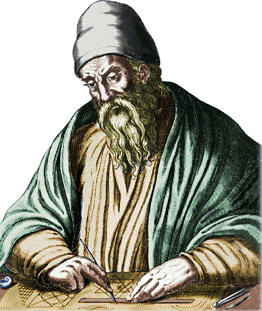
I was curious about how
I asked: "Is this a true portrait of
Upon reflection, I realized that it was a fictitious portrait.
It was drawn 2,000 years after
I later learned that many Greek scientists of ancient times were
born, raised and educated in
 [MSOffice27]
Our history books are full of erroneous statements.
Black History Month is a period for us to re-examine the
erroneous statements in our history books.
A period for us to challenge
these erroneous statements in our history books.
A period for us to teach our
children the truth. Teach them that
A period for us to acknowledge that science is the gift of
ancient
If
If
As my father taught me, the story is mightier than the warrior.
The story lives on long after the warrior has died.
Thomas Jefferson's belief that an African cannot understand the
subject of geometry lives on 200 years after
When I was young, I believed that the warrior is mightier than
the story. I did not understand that the pen is mightier than the sword.
As a young man, I believed history is about the truth.
As an older man, I learned that history is both truth and
illusion.
I learned that the value of my scientific discovery is in the
perception of those evaluating it.
I learned that the black student considers me to be his role
model.
I learned that the up and coming white scientist is reluctant to
accept me as his role model.
I learned that the established white scientist considers me to
be an anomaly. Considers me to be a "freak of
nature." Considers me to be the anti-Christ.
Considers me to be a scientific vampire that sucks on the
white race. Visualizes me as a monster with couple of
horns on his head.
I learned that what I am is not as important as what I am to
you.
I learned that when you ask me: "Who Are You?"
that you really meant "Who Am I?"
I learned that you are searching for yourself in me.
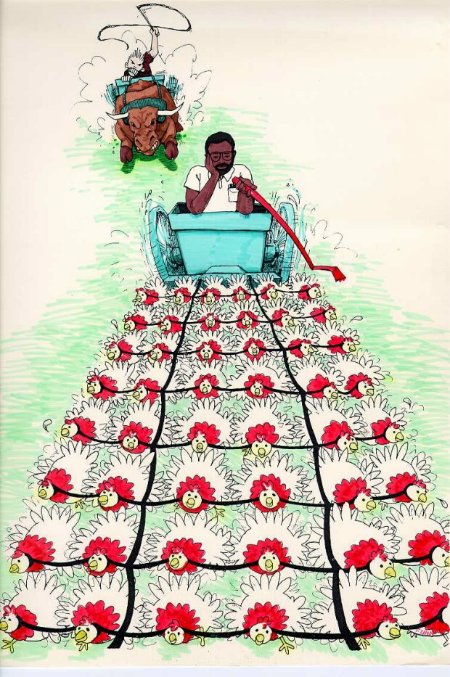
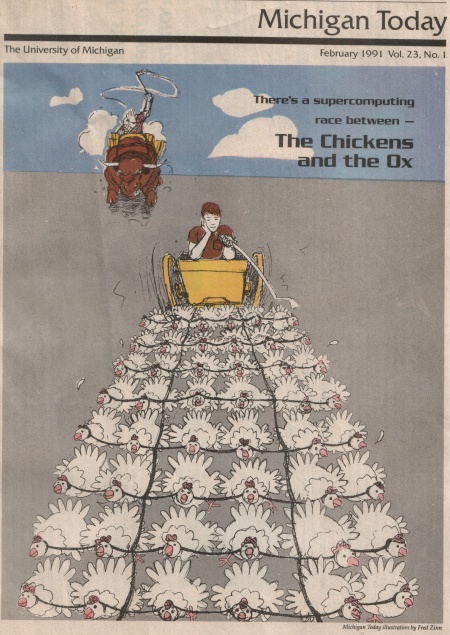
Twelve years ago, a magazine hired a white man to prepare an
illustration of a supercomputer wizard riding an ox. I was supposed to be the
supercomputer wizard. But the white illustrator, who knew that I am black,
portrayed me as a white person in his published illustration.
I learned that the white illustrator was searching for himself
in me.
Five hundred years ago, Leonardo da
Vinci was commissioned to paint his masterpiece "The Lord's Supper."
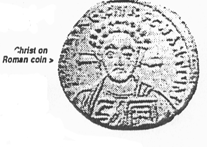
Before the Renaissance period, many paintings of the Madonna depicted a black
woman. The infant God or Christ-child was depicted as black. But Leonardo da Vinci was searching for himself in Jesus Christ. He
re-depicted Jesus Christ as white.
The Bible did not tell us what Jesus looked like. But we know
that he lived in the
Michelangelo used his family to pose for Jesus Christ. Michelangelo was searching
for himself in Jesus Christ. During the Renaissance, the mother of Christ
became a white woman.
I learned that King James wrote the Bible the way he believed it
was supposed to be written.
I was trained by white mathematicians. I read books about
History of Mathematics written by white authors. I learned in schools
controlled and dominated by Eurocentric thoughts.
Considering where I came from, it was heresy to suggest that
I learned that
I learned that Africans are the pioneers in many other fields of
study.
I learned that the modern chemist is not aware that the word
"chemistry" meant "black man's science."
I learned that the word chemistry was derived from the word
"Kemet." And that Kemet
is the ancient name for the land we now call
Yet the story of black people's contribution to the science of
chemistry is not included in chemistry textbooks. As my father taught me, the
story is greater than the warrior.
We Africans have to tell our story. We underestimate the power
of the story.
"What happened to the black people of Kemet,"
the traveler asked the old man.
"For legend had it that the people of Kemet
were black? What happened?"
"Ah," wailed the old man, "they lost their
history and they died."
Isaac Asimov is the author of more than 500 books. One of his
books called "Biographical Encyclopedia of Science," is standard
reference in many libraries.
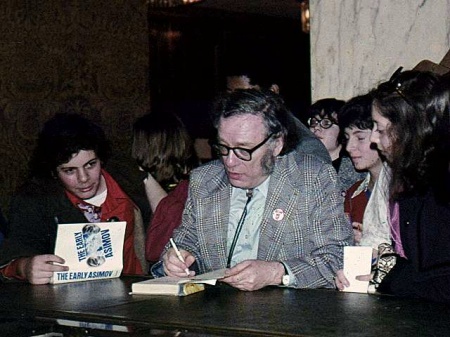
The Encyclopedia of
Science:
Acknowledges that an African
named Imhotep is the Father of Medicine.
It acknowledges that an African is the Father of Architecture.
It acknowledges that an African is the first scientist in
recorded history.
It acknowledges that the earliest Greek scientists were educated
in
If the earliest Greek scientists lived in
The oldest mathematics textbooks are called the Rhind,
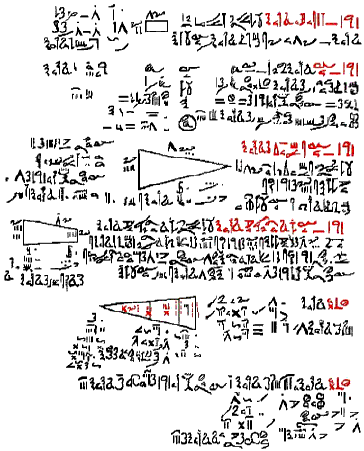
The Rhind Papyrus was not written by
Alexander Rhind --- the Scottish traveler that
purchased it. It was written 4,000 years ago by an African named Ahmes. But it was renamed after a non-mathematician that
purchased it.
The
The
Ladies and gentlemen, we should give credit where credit is due.
Scholars name a book after its author. Scientists name a discovery after the
discoverer. And technologists name an invention after the inventor.
Why then were African textbooks Europeanized by naming them
after European cities and persons? The reason is that the story is mightier
than the warrior. Ancient Africans were the ancient warriors and modern
Europeans are the modern storytellers.
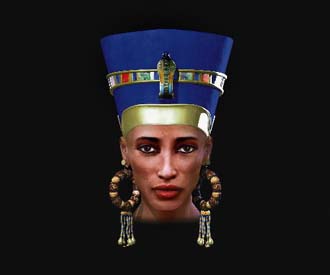
History is called "his story."
It is a story told from the perspective of the storyteller. From the bias of the storyteller. With the
prejudice of the storyteller.
"What is history?" asked Napoleon, the conquered
French emperor.
"History is nothing but a lie agreed upon!" Napoleon
answered.
Carter Woodson is the name of the historian
that founded Negro History Week in 1926. Woodson wrote:
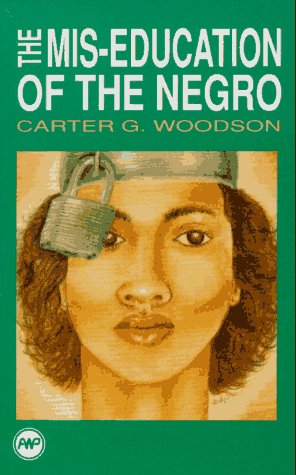
"When you control a man's thinking, you do not have to worry about his
actions."
"You do not have to tell him not to stand here or go
yonder. He will find his (proper place) and will stay in it.
You do not need to send him to the back door. He will go without
being told.
In fact, if there is no back door, he will cut one for his
special benefit. His education makes it necessary," said Woodson who was
the son of former slaves.
Someone asked me: "Why don't we have a White History
Month?"
"Every month is White History Month." I explained to
him.
However, our goal is to make every month Black History Month.
Our goal is to include black history into American history. And
to include African history into world history.
African history is a search for answers to profound questions.
Universal questions such as:
Who are we? Where have we been? And how did we get here?
History is the compass that tells us who we are, where we have
been, and where we are going.
We now know that
We should teach our children that:
Science is the gift of ancient
Finally, and most importantly, we should remind them that
Africans were the carriers of light.
Africans were not waiting in darkness for others to bring light
to them.
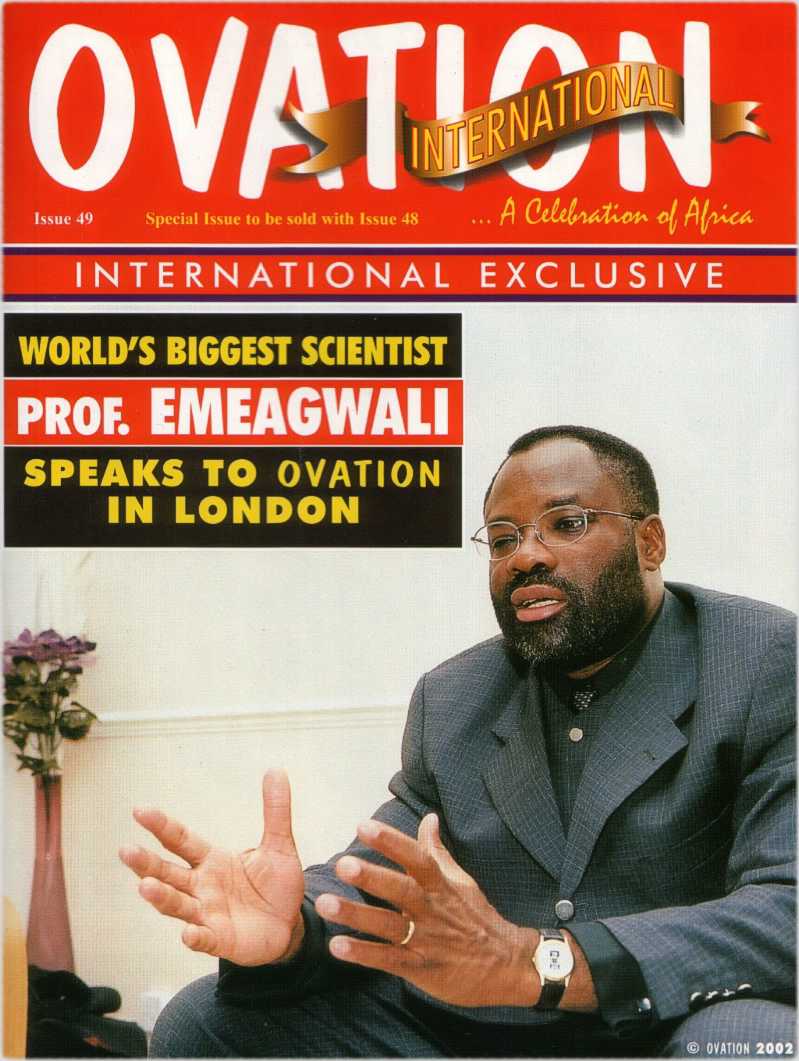
Chronology of Emeagwali’s Life
1921. James Nnaemeka Emeagwali (father of
Philip) born in May in
1938. Agatha Emeagwali, née Balonwu, (mother of
Philip) born on August 7 in
1954 Chukwurah Emeagwali born on
August 23 in
1955 Baptized as
“Philip” [MSOffice33]
1960 Enrolls in 1st
grade in January.
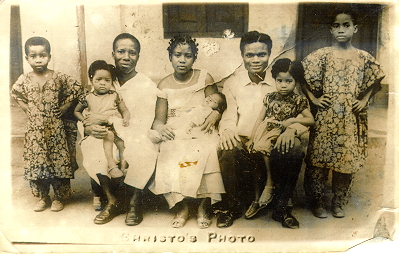
1962 Philip (far
right) in family photo taken on December 24 in
1966 Nigerian
military overthrows elected government. Civil uprising with
30,000 dead.
1967 Nigerian-Biafran war begins in May. One million died in 30-month
war.
1968 Emeagwali family fled
1969 Emeagwali conscripted
into the Biafran army in August, sent to Oguta war front.
1970 Biafran army defeated
in January. Emeagwali is discharged from the Biafran army.
1973 Emeagwali wins a
mathematics scholarship to study in the
1981 Marries Dale Brown on August 15 in
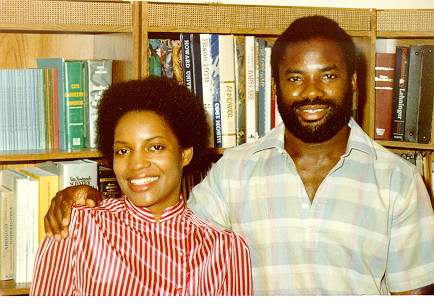
1983 Obtains
1987 Programs 65,536 electronic brains, called
processors to perform the world’s fastest calculation.
1989 Wins the Gordon Bell Prize alone, the
equivalent in the supercomputer industry of the Nobel Prize.
2000 Bill Clinton
extols Emeagwali as “one of the great minds of the
Information Age.”
2004 New African magazine poll ranks Emeagwali
as history’s greatest scientist of African descent.
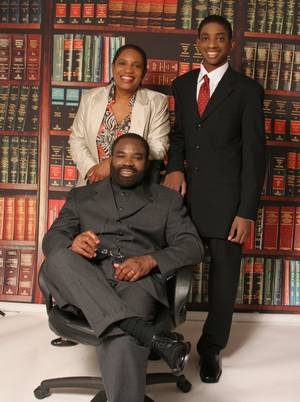
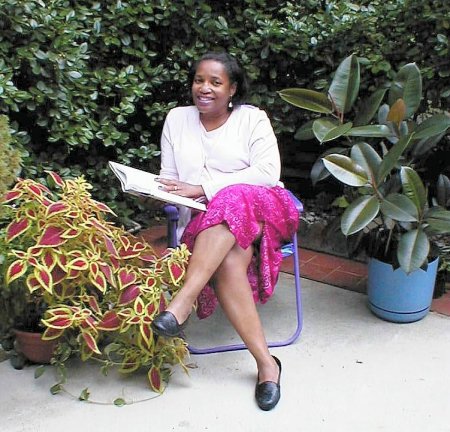
Dale Emeagwali
(
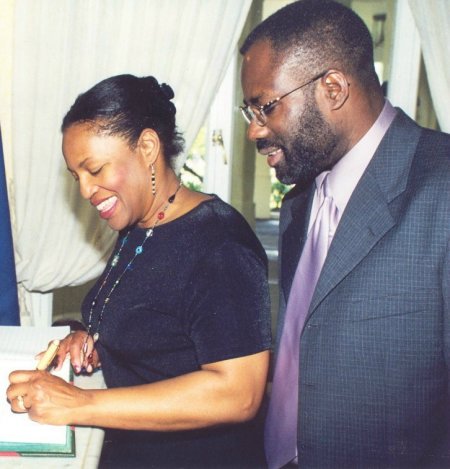
Dale and Philip Emeagwali signs the Governor-General's guestbook.
(King's House,
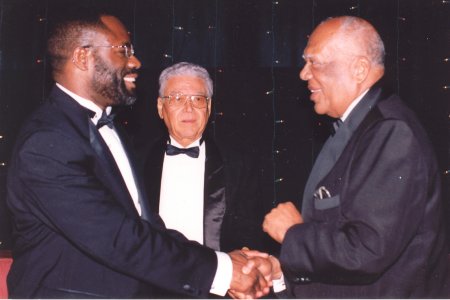
Emeagwali with Sir Howard Cooke
(The Head of State of
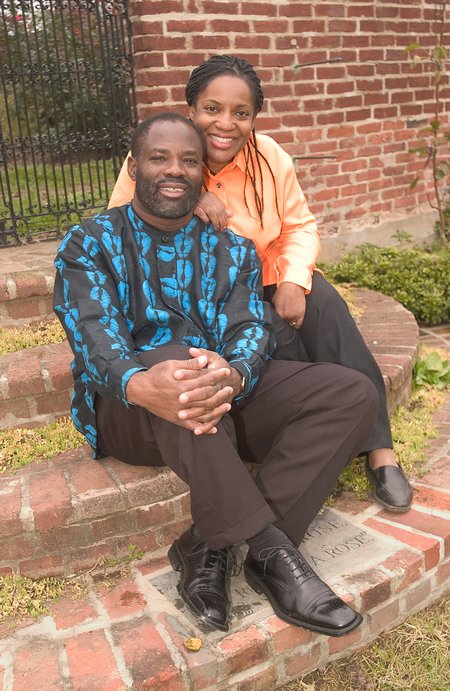
(Kingston Hilton Hotel.
i