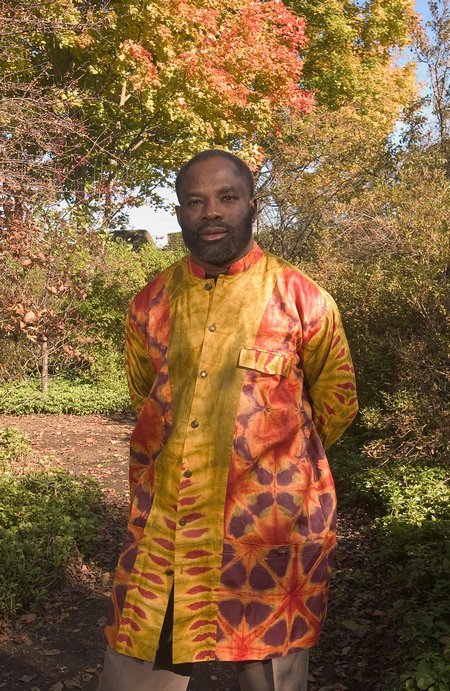
Onye Igbo ka Nbu
Chukwurah
Filip Emeagwali
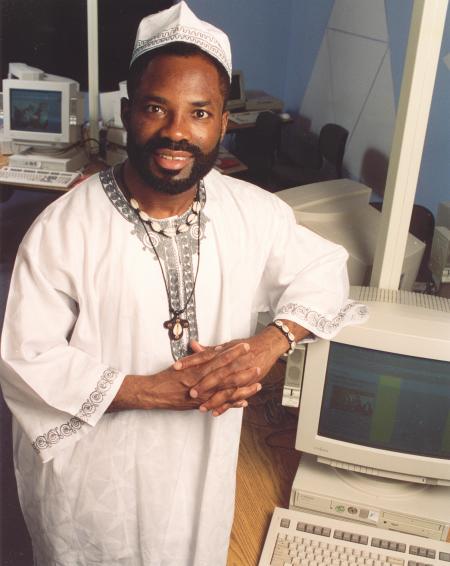
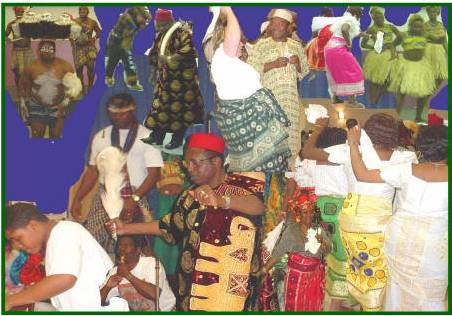
Ichoputaghari Ihe Banyere Umu Igbo Furu Efu
Ozi Nkwado Ndi Igbo nke Ma'zi Chukwurah Filip Emeagwali
degara Igbo Cultural Association of Calgary,
Ndi b'anyi ndeewo nu O!
Obi bu m so an~uli oge Ma'zi Kene Ufondu kpokurum ka m bia
buru onye obia puru iche na emume ncheta Ndi Igbo 2003 na
Iji kwado emume unu, ana m akpoku nwa Igbo obula ka ochee
echichi ma lotakwa ihe iriba ama puru iche Umu Igbo gara mba imilikiti afo gara
aga megasiri ikwado oganiru madu.
Ewerem ubochi Icheta Igbo were lota Ma'zi Jubo Jubogha nke
ana etu "Ja Ja," onye nke atoro na oru nafo iri na abua ma gbagide
mbo we buru Eze Igbo n'Opobo. Ndi ulo ikpe
Iji kwanyere ya ugwu ruru ya, ndi mba
Ozo, ewerem ubochi Icheta Igbo were kene Ma'zi Olaudah Equiano,
nwata ozo dikwa afo iri na abua erepulu n'oru onye nke jiri aka ya dere si:
"Abu m Igbo". Ewerem ukpa ekene bunye Ma'zi Equiano onye nke mere ka
anyi nwee akuko edere
Abu na esota bu abu nke ejiri were kwaa obere nwa anyi
Olaudah furu efu:
"Obu Onye ka anyi na acho? Obu
Onye ka anyi na acho?
Ikwuano ka anyi na acho.
Obu iyi ka ochulu? Biko nya nata.
Obu ugbo ka ojelu? Biko nya nata.
Ikwuano ka anyi na acho."
Ma'zi Ikwuano bu ichie, burukwa
nna-mmuo. Ndi ogu akwukwo dum, iji bobe ya ndu anwu anwu, nyere ya aha otutu:
"Nna akuko banyere ndi ojii."
Ewerem ubochi Ncheta Igbo were kponite mmuo Umu Igbo
nwoke, nwanyi na umuaka ndi Georgia's Sea Islands ndi nke miri rigbadoo oge ha
siri na ugbo oru manye na miri iji gbanari agbam oru. Akuko ndi anakpo n'oyibo
ndi
"Oshimiri butel'anyi, Oshimiri g'ebu anyi laa"
Omume dike nke Umu Igbo, makwa inupu isi ha nupuru banyere
agbam oru madu ewerela onodu anwu-anwu na akuko makwa abu ndi bi na ikpere miri
Ka mmuo Umu Igbo furu Efu soro unu n'akuku n'ije unu,
gbanyere unu izu okwu, makwa dube unu na ochucho amam ihe na ako n'uche unu.
Ma'zi Ikwuano kowara onwe ya sin a ya bu "obia na
obodo oghotaghi" Dika ndi obia na obodo
Ndi ba anyi si na njiko ka, mmadu ka e ji aba.
Igbo Kwenu!
[Chukwurah nwa Emeagwali bu onye
onicha. Ma'zi Emmanuel Chinyeaka Okoli de re nka na asusu
Igbo. Udo di ri gi, nwannem.]
AZIZA
GBASARA IHE IDERENA INTANET ...
Anwum
nwa igbo. Ama ighm ma ibu kwa onye igbo ? Na egbu yioge achor m ka m ken gi
maka ihe buru ibu i mere na ala
Onwere na ata ihe unu ga ekwu ka ata ka nkwere na otu ndi oca si eme ka otu ndi
igbo si eme ihe nma.
Ebi gom na obodo oybo aro ise kita.
Nsogbu anyi no nime ya tata ma obu na
O kwa anyi ka odiri ime ka otu ihe di gbanwe. O wu ihe siri ike. Mana nkuzi ri
ndi mmadu ya na iji
Ekele m gi nke ukwuu.
Emeka
Nwagbo
Czech Republic, nnaemeka@terminal.cz
------------------------------
nwanne
mmadu ejim ezigbo oge were na asigi ma jisie ike na olugi nke ukwuu imego ka
mba
----------------------------
Daniel
Ochonma
d.ochonma@web.de
Location:
3.
October 2003
Dike
eji aga mba k'ibu, obu ihe oma, burukwa ihe anuri na ibu nwafo Igbo.
Asim
oseburuwa gozie ma nyekwa gi n'ezinulogi ogologo ndu,amamihe n'ahu isike.
Cheta
na ndigbo si gidigidi bu ugwu eze.
Daniel
Ochonma
P.R.O,
Igbo Contact Forum
ndewo
okachamara filip nwa emegwali! aguo lam nno ihe gbasara gi nke ukwu. amagi ama
n'uwa ninie. aha gi n'eje n'abata abata. iwu okacha mara n'computa. ele nu otu
aga eji amamihe gia nyere alaigbo aka taa. onodu ebe ahu di njo ugbua. ugwu
onye igbo ara aja. ihe anyi choro wu ekwueme. owuru kwanu ma ighola onye ocha
hmm ekele dikwara chukwu. ya gazie ra gila ezinulogi.
owum
onyewuchi nwa obirieze nwafo igbo
Mazi
Emeagwali,
dike ka i bu. Great hardwork,
dedication along with a high degree of thinking have been yielding wonderfully in
Igboland. This is despite the fact that 'ndi-iro
gbara anyi gburu-gburu.'
Mazi
Emeagwali,
your
name and wonderful performance continue to pierce spaces in Igboland, in
Obum
Ekeanyanwu,
biafraland.com,
I
read a lot about you in
Andy Ajukwu
aajukwu@primanet.com
 [MSOffice8]
Emmanuel
Franklyne Ogbunwezeh
ogbunwezeh@yahoo.com
frankfurt
17.
November 2003
Dear
Dr.Emeagwali,
You
are the tallest African in the Pantheons of science. Your roots and ancestry is
an august one and I am proud to come from the same roots as you. I bu onye Igbo
and I am glad that the world can at least hold its collective breath whenever
you yawn, because you command a name which rings a bell in all circles. Those
who think that nothing good can come out of our Biafran 'Nazareth' can now bury
their thoughts in shame, for a star that is as constant as that that rises from
the East has arrived to illumine the world of science. The roll of the creators
of worlds would read names like that of
Ride
on Brother
I
am a Nigerian of igbo extraction presently working on my Ph.d in Social Ethics
at the Wolfgang Goethe Universitat,
I
am proud of trailblazers like you, who saw the world a palace of bricks and
left it an empire of marble.
Ethelbert
Akwuruaha
noblebrite@yahoo.com
20.
November 2003
Dear
Emeagwali,
You
are a role model to us Igbos, Nigerians, Africans, and the Black in Diaspora.
As Chinua Achebe would say: You have washed your hands, thus you can now dine
with the great minds and celebrities of our time.
If
Albert Einsten and Isaac Newton were alive today, they would have come to
"worship" at your scientific alter for more light and inspiration.
I
prophesy that one day - very soon, you will be honoured with the Nobel Prize
for Physics and for service to humanity.
Ride
on brother.
You
make Nigerians proud & more importantly all marginalised people around the
world. A Nobel Prize is simply not enough ... Do consider coming back to Africa
more often...imagine how many Emeagwalis can be inspired with just your
physical presence. You are truly, sincerely, & beautifully GREAT!!!
mathethe
sehume,
MAZI
ACHOLONU CHUKWUEMEKA
emekaacholonu@yahoo.com
11.
October 2003
Dear
Dr. Philip,
I
am very much in awe of your great inventions. I am very proud to be an Igbo man
I have this dream that one day I shall be free. Not only me but all the Ibos. I
hope you will contribute to getting us freed. The price we have been paying so
far is enormous. The burden is becoming unbearable. But as the Igbo adage says,
"the darkest part of the night is that closest to day break. Do not forget
how Albert Einstein used his talent to secure the Jews a state and a place in
both the geography and map of the world. You the Albert Einstein of the Jews
called "Ndi Igbo" in
I
also do hope that you have a plan to help the deprived Igbo children to grow
technology wise. I hope you have a plan to assist the down-trodden Igbo man
rediscover his destiny. Ihope you have plan to prevent future Igbo generation
from suffering and passin through the same hardship that you passed through in
life. You can help us, brother. You have beaten many odds. You can also beat
this. Please, do something to help.
I
will write you again before long.
Extend
my deepest homely greetings to your beloved family, especially your wife who
has stood by you all these years.
Thank
you, sir.
Your
in Igbo Spirit,
Emeka.
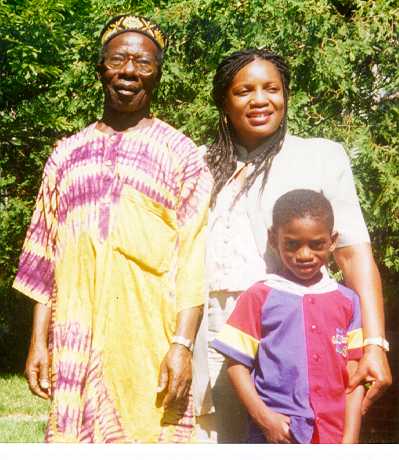
I
wish the media would let us know more about you, because you are on a higher level
compared to the likes of Bill Gates.
NNA,
IMELA, more grease to your elbow, between you and your wife, quite
impressive!!!! I wish God will give us youths the will power to achieve success
like you have.
You
are not even finished yet, you're still on your mission of conquering the odds.
I'll have to tell my father to check out your internet, because he can relate
to you, having accomplished so much at such a young age. I know we'll be
hearing more about you in the years to come.
NNA,
I BU NNO ONYE IGBO.
"nick k. ezewuru" <nezewuru@yahoo.com>
congratulation
my big brother
dear
phillip
i,m
very happy for your effort, and what you have
achieved
in computer, i read interview granted to you and in your interview you did not
forget igboland. you still show that you’re an igbo man. i,m happy because of
you. you have shown the world that igbo man can develop something. I,m not
educated. I,m a 30-year-old business man in
Please
may I ask you: are you from what town because t.but in all i will like you to
be
my
pal. I admire you because you have made me to be proud of what Igboman can achieve.
I pray that God will grant you more wisdom to achieve more things. Thanks and remain
blessed.
From
your Igbo brother and fan.
Regards
Kaycee.
Rediscovering
Our
Lost Igbo Brethren
by Chukwurah
Emeagwali
at Igbo Cultural Day
celebration
at Calgary , Canada August 23, 2003 .
Ozi nkwado
Ndi Igbo nke Ma'zi Chukwurah Emeagwali
degara Ndi Igbo bi na obodo Calgary,
Emeagwali
|
Ndi b'anyi
ndeewo nu O!
I felt honored
when Ma'zi Kene Ufondu invited me to say a few words to you. As part of your
celebration, I urge you to reflect and remember the contributions of tens of
millions of Diasporan Igbos (ndi bi n'Igbo Uzo, nwanne di na mba) that
left Ala Igbo a few centuries ago. On Igbo Day, I
remember Ma'zi Jubo Jubogha alias "Ja Ja," the 12-year-old
slave-boy that became King of Opobo (Eze n'Opobu Igbo). Ma'zi Jubogha
was summarily tried in a British court and found guilty of "treaty
breaking." For "blocking the highways of trade," Ma'zi Jubogha
was permanently exiled to On Igbo Day, I
salute Ma'zi Olaudah Equiano, another 12-year-old slave-boy, for proudly
writing: "I am Eboe" (Abu m Igbo). I thank Ma'zi Equiano for
providing us the earliest written account of the culture and customs of Ndi
Igbo. I thank Ma'zi Equiano for chronicling the horrific injustices of
slavery. The following
chant mourned the loss of young Olaudah: Who
are we looking for, who are we looking for? Ma'zi
Equiano is an ichie, nna-mmuo (revered ancestor, great spirit).
Scholars immortalized this nwa'afo Igbo (true son of the soil) with
the title: "father of black literature." On Igbo Day, I
invoke the spirits of the ten heroic "Eboe" men, women, and
children of "The
water brought us; the water will take us away." The act of
courage and fierce resistance of the "Eboes" to the condition of
bondage is immortalized in the folklore and song of the Gullah people of
coastal May the spirits
of those "Lost Igbos" walk beside you, whisper to you, and guide
you in your quest for knowledge and wisdom. Ma'zi Equiano
described himself as a "stranger in a strange land." As strangers
in Igbo Kwenu!
Chukwurah
Emeagwali dropped out of school at the age of 12, served in the Biafran army
at the age of 14 and came to the
Ja Ja of
Opobo
BIOGRAPHICAL ESSAY
JaJa of Opobo (ca. 1820-1891) was a
political and military strategist, brought to the The story of Ja Ja recounts a man of
servile status hurdling intimidating odds to attain wealth and power, and
founding in the latter half of the 19th century the most prosperous
city-state in the Delta area of To follow the Ja Ja story or, indeed, revolution, an
explanatory note is necessary. Until the end of the 19th century, the Delta
communities played a crucial role in European and American trade with The Delta society was organized in
Canoe Houses. A Canoe House was the pivot of social organization and also,
notes K.O. Dike, "a cooperative trading unit and a local government
institution." It was usually composed of a wealthy merchant (its
founder), his family, and numerous slaves owned by him. A prosperous house
could comprise several thousand members, both free and bonded, owning
hundreds of trade canoes. In this inte nsely competitive society, leadership
by merit--not by birth or ascriptions--was necessary if a house was to make
headway in the turbulent, cut-throat competition that existed between houses.
Any person with the charisma and proven ability, even if of servile birth,
could rise to the leadership of a house, but could never become king. Ja Ja
would achieve this, and much more. Finding young Ja Ja too headstrong
for his liking, Chief Allison made a gift of him to his friend, Madu, a chief
of the Anna Pepple House, one of the two houses of the royal family (the
other being the Manilla Pepple House). Ja Ja was slotted into the lowest rung
of the Bonny slave society ladder, that of an imported slave, distinct from
that of someone who was of slave parentage but born in the Delta. As a youth, he worked as a paddler on
his owner's great trade canoes, traveling to and from the inland markets.
Quite early, he demonstrated exceptional abilities and business acumen,
quickly identified with the Ijo custom of the Delta, and won the hearts of
the local people as well as those of the European supercargoes. It was unusual
for a slave of his status to make the transition from canoe paddling to
trading, but Ja Ja--through his honesty, business sense, and amiability--soon
became prosperous. For a long while, Ja Ja turned his
back on Bonny politics, concentrating his immense energies on accumulating
wealth through trade, the single most important criterion to power in the
Delta. At the time, Bonny politics were volatile as a result of the
irreconcilable and acrimonious contest for supremacy between the Manilla
Pepple House and the Anna Pepple House to which Ja Ja belonged.
Coincidentally, both houses were led by remarkable characters of Igbo slave
origins--Oko Jumbo of the Manilla House and Madu (after him Alali his son) of
the Anna House. Ja Ja Rescues Debt-Ridden House
In 1863, Alali died, bequeathing to
his house a frightening debt of between £10,000 and £15,000 owed to European
supercargoes. Fearing bankruptcy, all of the eligible chiefs of the house
declined nomination to head it. It was therefore a great relief when Ja Ja
accepted to fill the void. With characteristic energy, he proceeded to put
his house in order by reorganizing its finances. Conscious that the palm-oil
markets in the hinterland and the wealth of the European trading community on
the coast constituted the pivot of the Delta economy, he ingratiated himself
with both sides. In a matter of two years, he had liquidated the debt left
behind by his predecessor and launched his house on the path of prosperity.
When less prosperous and insolvent houses sought incorporation into the Anna
House, Ja Ja gradually absorbed one house after another. By 1867, his remarkable success had
become common knowledge throughout Bonny. The British consul to the area, Sir
Richard Burton, had cause to remark that although Ja Ja was the "son of
an unknown bush man," he had become "the most influential man and
greatest trader in the [Imo] River." Predicted Meanwhile, two developments occurred
in Bonny, serving to harden existing jealousies. First, in 1864, Christianity
was introduced into the city-state, further polarizing the society. While the
Manilla House welcomed the Christians with a warm embrace, the Anna House was
opposed to the exotic religion. Not surprisingly, the missionaries sided with
the Manilla House against the Anna House. Second, in 1865, King William
Pepple died and, with this, the contest for the throne between the two royal
houses took on a monstrous posture. Three years later, in 1868, Bonny was
ravaged by fire, and the Anna House was the worst hit. In the discomfiture of
his opponent, Oko Jumbo saw his opportunity. Knowing that the fire had all
but critically crippled Ja Ja's house, he sought every means to provoke an
open conflict. On the other side, Ja Ja did everything to avoid such a
conflict, but, as Dike states, "Oko Jumbo's eagerness to catch his
powerful enemy unprepared prevailed." On Ja Ja had sued for peace in order to gain time to retreat
from Bonny with his supporters with little or no loss in men and armament. A
master strategist, he relocated in the Andoni country away from the seaboard
at a strategic point at the mouth of the Imo river, the highway of trade
between the coastal communities and the palm-oil rich Kwa Iboe and Igbo
country. There, he survived the initial problems of a virgin settlement as
well as incessant attacks of his Bonny enemies. He Proclaims Independent Settlement Of Opobo
In 1870, feeling reasonably secure, Ja Ja proclaimed the
independence of his settlement which he named Opobo, after Opubu the Great,
the illustrious king of Bonny and founder of Anna House who had died in 1830.
As Dike writes: [I]t is characteristic of the man
that he had not only a sense of the occasion but of history. . . . Kingship
was impossible of attainment for anyone of slave origins in Bonny. Instead he
sought another land where he could give full scope to his boundless energies. Long before the war of 1869, Ja Ja had been carefully
planning to found his own state. The war merely provided him with the
occasion to implement his design. In naming his new territory Opobo, Ja Ja was appealing to
the nostalgia and historical consciousness of his followers while giving them
the impression that he was truly the heir of the celebrated king. That this
impression was widespread and accepted by most Bonny citizens may be judged
from the fact that of the 18 houses in Bonny, 14 followed Ja Ja to Opobo. To no avail, the British consul tried to coerce Ja Ja to
come back to Bonny. Against the admonition of the consul, and in the face of
Bonny's displeasure, many British firms began to trade openly with Opobo
while others transferred their depots there. By May of 1870, the Ja Ja
revolution had driven the death-knell on Bonny's economy. British firms
anchoring there are said to have lost an estimated £100,000 of trade by
mid-1870. The city-state fell from grace to grass as Opobo, flourishing on
its ashes, became in Ofonagoro's words, "the most important trade center
in the For 18 years, Ja Ja ruled his kingdom with firmness and
remarkable sagacity. He strengthened his relations with the hinterland
palm-oil producers through judicious marriages and blood covenants which
bound the parties into ritual kingship. He armed his traders with modern
weapons for their own defense and that of the state. He thus monopolized
trade with the palm-oil producers and punished severely any community that
tried to trade directly with the European supercargoes. Queen Victoria Awards Ja Ja Sword Of Honor
In 1873, the British recognized him as king of independent
Opobo, and Ja Ja reciprocated by sending a contingent of his soldiers to help
the British in their war against the Ja Ja's reign has been described as a striking instance of
selective modernization. He retained most of the sociopolitical and cultural
institutions of Bonny, such as the house system, and stuck steadfastly to the
religion of his fathers, arguing that Christianity was a serious ferment of
societal destabilization. While recognizing the value of Western education
and literacy, he objected to its religious component. Thus, he sent his two
sons to school in The honeymoon between Ja Ja and the
British turned out to be meteoric: the ultimate ambitions of the two ran at
cross-purposes. Ja Ja guarded his independence jealously, had a tight grip on
the interior markets and confined British traders to Opobo, away from these
markets. He made sure that the traders paid their comeys (customs and
trade duties) as and when due. But in the 1880s, the clouds of
British imperialism were closing in menacingly on Opobo, the overthrow of
indigenous sovereignties having been initiated by John Beecroft, the first
British consul to In July 1884, fearing German intrusion in the Delta, the
British consul, Edward Hewett, rushed to the area, foisting treaties of
protection on the indigenous sovereignties. With a veiled threat from a
man-of-war, Ja Ja too was stampeded into placing his kingdom under British
protection. But unlike the other African monarchs, this was not before he had
sought explanation for the word "protectorate," and had been
assured by the consul that his independence would not be compromised. Hewett
wrote to Ja Ja informing him, inter alia (among other things), that: the queen does not want to take your
country or your markets, but at the same time she is anxious that no other
nation should take them. She undertakes . . . [to] leave your country still
under your government; she has no wish to disturb your rule. At Ja Ja's insistence, a clause providing for free trade
in his kingdom was struck off before he agreed to sign the treaty. European Powers Sign Treaty Of
The following year, European powers
entered into the Treaty of Berlin which set the stage for the scramble and
partition of Worse times were yet to come as
political problems were compounded by economic dispute. The 1880s witnessed a
severe trade depression that ruined some of the European firms trading in the
Delta and threatened the survival of others. The surviving firms responded to
the situation in two ways. First, they reached an agreement among themselves,
though not with complete unanimity, to offer low prices for produce. Second,
they claimed the right to go directly to the interior markets in order to
sidestep the coastal middlemen and reduce the handling cost of produce. As would be expected, Ja Ja objected
to these maneuvers and proceeded to ship his own produce directly to Under a threat of naval bombardment, Ja Ja signed an
agreement with the British consul in July 1887 to allow free trade in his
territory. By now, he knew that British Official Reneges On Promises
Harry Johnston, acting vice-consul, a
young hothead anxious to advance his colonial career, imagined that Ja Ja
would be a perfect stepping-stone to attain his ambition. Arriving at Opobo
on a man-of-war, I hereby assure you that whether you
accept or reject my proposals tomorrow, no restrictions will be put on
you--you will be free to go as soon as you have heard my message. But again the British reneged on their pledge: Ja Ja would
not return to his kingdom alive. Once on board the warship Goshawk, With the exit of Ja Ja, the most formidable obstacle to In exile, Ja Ja is said to have borne himself with kingly
dignity. He made repeated appeals to Today, an imposing statue of Ja Ja
stands in the center of Opobo with the inscription: A king in title and in deed. Always
just and generous. FURTHER
Ja Ja of Opobo
"Several of the
Igbos who were brought to the [ Political
and military strategist, brought to the BIOGRAPHICAL ESSAY
The story of Ja Ja
recounts a man of servile status hurdling intimidating odds to attain wealth
and power, and founding in the latter half of the 19th century the most
prosperous city-state in the Delta area of To follow the Ja Ja story or, indeed, revolution, an
explanatory note is necessary. Until the end of the 19th century, the Delta
communities played a crucial role in European and American trade with The Delta society was
organized in Canoe Houses. A Canoe House was the pivot of social organization
and also, notes K.O. Dike, "a cooperative trading unit and a local
government institution." It was usually composed of a wealthy merchant
(its founder), his family, and numerous slaves owned by him. A prosperous
house could comprise several thousand members, both free and bonded, owning
hundreds of trade canoes. In this intensely competitive society, leadership
by merit--not by birth or ascriptions--was necessary if a house was to make
headway in the turbulent, cut-throat competition that existed between houses.
Any person with the charisma and proven ability, even if of servile birth,
could rise to the leadership of a house, but could never become king. Ja Ja
would achieve this, and much more. Finding young Ja Ja
too headstrong for his liking, Chief Allison made a gift of him to his
friend, Madu, a chief of the Anna Pepple House, one of the two houses of the
royal family (the other being the Manilla Pepple House). Ja Ja was slotted
into the lowest rung of the Bonny slave society ladder, that of an imported slave,
distinct from that of someone who was of slave parentage but born in the
Delta. As a youth, he worked
as a paddler on his owner's great trade canoes, traveling to and from the
inland markets. Quite early, he demonstrated exceptional abilities and business
acumen, quickly identified with the Ijo custom of the Delta, and won the
hearts of the local people as well as those of the European supercargoes. It
was unusual for a slave of his status to make the transition from canoe
paddling to trading, but Ja Ja--through his honesty, business sense, and
amiability--soon became prosperous. For a long while, Ja
Ja turned his back on Bonny politics, concentrating his immense energies on
accumulating wealth through trade, the single most important criterion to power
in the Delta. At the time, Bonny politics were volatile as a result of the
irreconcilable and acrimonious contest for supremacy between the Manilla
Pepple House and the Anna Pepple House to which Ja Ja belonged.
Coincidentally, both houses were led by remarkable characters of Igbo slave
origins--Oko Jumbo of the Manilla House and Madu (after him Alali his son) of
the Anna House. Ja Ja Rescues
Debt-Ridden House
In 1863, Alali died,
bequeathing to his house a frightening debt of between £10,000 and £15,000
owed to European supercargoes. Fearing bankruptcy, all of the eligible chiefs
of the house declined nomination to head it. It was therefore a great relief
when Ja Ja accepted to fill the void. With characteristic energy, he
proceeded to put his house in order by reorganizing its finances. Conscious
that the palm-oil markets in the hinterland and the wealth of the European
trading community on the coast constituted the pivot of the Delta economy, he
ingratiated himself with both sides. In a matter of two years, he had
liquidated the debt left behind by his predecessor and launched his house on
the path of prosperity. When less prosperous and insolvent houses sought
incorporation into the Anna House, Ja Ja gradually absorbed one house after
another. By 1867, his
remarkable success had become common knowledge throughout Bonny. The British
consul to the area, Sir Richard Burton, had cause to remark that although Ja
Ja was the "son of an unknown bush man," he had become "the
most influential man and greatest trader in the [Imo] River." Predicted Meanwhile, two
developments occurred in Bonny, serving to harden existing jealousies. First,
in 1864, Christianity was introduced into the city-state, further polarizing
the society. While the Manilla House welcomed the Christians with a warm
embrace, the Anna House was opposed to the exotic religion. Not surprisingly,
the missionaries sided with the Manilla House against the Anna House. Second,
in 1865, King William Pepple died and, with this, the contest for the throne
between the two royal houses took on a monstrous posture. Three years later, in
1868, Bonny was ravaged by fire, and the Anna House was the worst hit. In the
discomfiture of his opponent, Oko Jumbo saw his opportunity. Knowing that the
fire had all but critically crippled Ja Ja's house, he sought every means to
provoke an open conflict. On the other side, Ja Ja did everything to avoid
such a conflict, but, as Dike states, "Oko Jumbo's eagerness to catch
his powerful enemy unprepared prevailed." On Ja Ja had sued for peace in order to gain time to retreat
from Bonny with his supporters with little or no loss in men and armament. A
master strategist, he relocated in the Andoni country away from the seaboard
at a strategic point at the mouth of the Imo river, the highway of trade
between the coastal communities and the palm-oil rich Kwa Iboe and Igbo
country. There, he survived the initial problems of a virgin settlement as
well as incessant attacks of his Bonny enemies. He Proclaims Independent Settlement Of Opobo
In 1870, feeling reasonably secure, Ja Ja proclaimed the
independence of his settlement which he named Opobo, after Opubu the Great,
the illustrious king of Bonny and founder of Anna House who had died in 1830.
As Dike writes: [I]t is
characteristic of the man that he had not only a sense of the occasion but of
history. . . . Kingship was impossible of attainment for anyone of slave
origins in Bonny. Instead he sought another land where he could give full
scope to his boundless energies. Long before the war of 1869, Ja Ja had been carefully
planning to found his own state. The war merely provided him with the
occasion to implement his design. In naming his new territory Opobo, Ja Ja was appealing to
the nostalgia and historical consciousness of his followers while giving them
the impression that he was truly the heir of the celebrated king. That this
impression was widespread and accepted by most Bonny citizens may be judged
from the fact that of the 18 houses in Bonny, 14 followed Ja Ja to Opobo. To no avail, the British consul tried to coerce Ja Ja to
come back to Bonny. Against the admonition of the consul, and in the face of
Bonny's displeasure, many British firms began to trade openly with Opobo
while others transferred their depots there. By May of 1870, the Ja Ja
revolution had driven the death-knell on Bonny's economy. British firms
anchoring there are said to have lost an estimated £100,000 of trade by
mid-1870. The city-state fell from grace to grass as Opobo, flourishing on
its ashes, became in Ofonagoro's words, "the most important trade center
in the For 18 years, Ja Ja ruled his kingdom with firmness and
remarkable sagacity. He strengthened his relations with the hinterland
palm-oil producers through judicious marriages and blood covenants which
bound the parties into ritual kingship. He armed his traders with modern
weapons for their own defense and that of the state. He thus monopolized
trade with the palm-oil producers and punished severely any community that
tried to trade directly with the European supercargoes. Queen Victoria Awards Ja Ja Sword Of Honor
In 1873, the British recognized him as king of independent
Opobo, and Ja Ja reciprocated by sending a contingent of his soldiers to help
the British in their war against the Ja Ja's reign has been described as a striking instance of
selective modernization. He retained most of the sociopolitical and cultural
institutions of Bonny, such as the house system, and stuck steadfastly to the
religion of his fathers, arguing that Christianity was a serious ferment of
societal destabilization. While recognizing the value of Western education
and literacy, he objected to its religious component. Thus, he sent his two
sons to school in The honeymoon between
Ja Ja and the British turned out to be meteoric: the ultimate ambitions of
the two ran at cross-purposes. Ja Ja guarded his independence jealously, had
a tight grip on the interior markets and confined British traders to Opobo,
away from these markets. He made sure that the traders paid their comeys
(customs and trade duties) as and when due. But in the 1880s, the
clouds of British imperialism were closing in menacingly on Opobo, the
overthrow of indigenous sovereignties having been initiated by John Beecroft,
the first British consul to In July 1884, fearing German intrusion in the Delta, the
British consul, Edward Hewett, rushed to the area, foisting treaties of
protection on the indigenous sovereignties. With a veiled threat from a
man-of-war, Ja Ja too was stampeded into placing his kingdom under British
protection. But unlike the other African monarchs, this was not before he had
sought explanation for the word "protectorate," and had been
assured by the consul that his independence would not be compromised. Hewett
wrote to Ja Ja informing him, inter alia (among other things), that: the queen
does not want to take your country or your markets, but at the same time she
is anxious that no other nation should take them. She undertakes . . . [to]
leave your country still under your government; she has no wish to disturb
your rule. At Ja Ja's insistence, a clause providing for free trade
in his kingdom was struck off before he agreed to sign the treaty. European Powers Sign Treaty Of
The following year,
European powers entered into the Treaty of Berlin which set the stage for the
scramble and partition of Worse times were yet
to come as political problems were compounded by economic dispute. The 1880s
witnessed a severe trade depression that ruined some of the European firms
trading in the Delta and threatened the survival of others. The surviving
firms responded to the situation in two ways. First, they reached an
agreement among themselves, though not with complete unanimity, to offer low
prices for produce. Second, they claimed the right to go directly to the
interior markets in order to sidestep the coastal middlemen and reduce the
handling cost of produce. As would be expected,
Ja Ja objected to these maneuvers and proceeded to ship his own produce
directly to Under a threat of naval bombardment, Ja Ja signed an
agreement with the British consul in July 1887 to allow free trade in his
territory. By now, he knew that British Official
Reneges On Promises
Harry Johnston,
acting vice-consul, a young hothead anxious to advance his colonial career, imagined
that Ja Ja would be a perfect stepping-stone to attain his ambition. Arriving
at Opobo on a man-of-war, I hereby
assure you that whether you accept or reject my proposals tomorrow, no
restrictions will be put on you--you will be free to go as soon as you have
heard my message. But again the British reneged on their pledge: Ja Ja would
not return to his kingdom alive. Once on board the warship Goshawk, With the exit of Ja Ja, the most formidable obstacle to In exile, Ja Ja is said to have borne himself with kingly
dignity. He made repeated appeals to Today, an imposing
statue of Ja Ja stands in the center of Opobo with the inscription: A king in title and
in deed. Always just and generous. PERSONAL
INFORMATION
Name variations: original Igbo name, Mbanaso; named Jubo
Jubogha in Bonny (shortened to Jo Jo but popularized in European historical
literature as Ja Ja). Born around 1820/1821 in Amaigbo village group in the
heart of Igboland; died in exile in 1891 at CHRONOLOGY
FURTHER
Olaudah
Equiano Also
known as: Gustavus Vassa
“The shrieks of the
women and the groans of the dying rendered the whole a scene [on the slave
ship] of horror almost inconceivable.” BIOGRAPHICAL ESSAY
When Olaudah Equiano
(pronounced ek-wee-AHN-o) was 10 or 11 years old, kidnappers came into his
Ibo village in what is now eastern In 1789 Equiano published a two-volume book, The
Interesting Narrative of the Life of Olaudah Equiano or Gustavus Vassa the
African. It is an account of his life, from his childhood in Taken captive
Equiano recalls in
his narrative how kidnappers stole him and his sister from their family's
village when the elders were out working in the fields. He says they traveled
about six or seven months before he reached the coast. Some time during the
trip, he and his sister were separated from each other. Equiano went from one
master to another on the way to the coast; once a master sold him for cowrie
shells (small hard white shells from the "The stench of the hold while we were on the coast
was so intolerably loathsome that it was dangerous to remain there for any
time.... The closeness of the place and the heat of the climate, added to the
number in the ship, which was so crowded that each had scarcely room to turn
himself, almost suffocated us. This produced copious perspirations, so that
the air soon became unfit for respiration from a variety of loathsome smells,
and brought on a sickness among the slaves, of which many died.... This
wretched situation was again aggravated by the galling of the chains, now
become insupportable, and the filth of the necessary tubs, into which the
children often fell and were almost suffocated. The shrieks of the women and
the groans of the dying rendered the whole a scene of horror almost
inconceivable." After several months at sea, the ship landed at Education at sea and in England
In 1754 When they returned to
Later that year,
Pascal set sail again, this time aboard the Cheated of his freedom
Toward the end of 1761 the ship returned to Under instruction from Pascal, the captain sold Equiano
when they got to Equiano soon found,
however, that the life of a freed man in the islands was fraught with danger.
Blacks had no protection under the law and might easily be kidnapped and
taken away on a ship as a slave. To protect himself, Equiano signed on as a
sailor for 36 shillings a month on a ship going to Life as a freed slave
Equiano continued as
a sailor for several more voyages. Once he had to command the ship himself as
the captain and first mate took ill. The captain died on board the ship and
Equiano successfully sailed the sloop safely into harbor. He also survived a
shipwreck in the In 1766 Equiano went to Not long after their return to Joins the antislavery
crusade
The final phase of
Equiano's life was much more predictable and serene than the years leading up
to it. He became involved in the antislavery movement and began work on his
autobiography. Because of his activities in the abolitionist movement, the
naval authorities in Equiano never made
the trip back to After his dismissal from the expedition, Equiano completed
his book. When it was published in 1789 he traveled throughout FURTHER
A copy of Equiano's marriage certificate. On Olaudah Equiano Also known as: Gustavus Vassa
BIOGRAPHICAL ESSAY
Olaudah Equiano
(1745-ca. 1801) was an African slave, freedman, and author who wrote the
first outstanding autobiography in slave narrative literature. Olaudah Equiano was
born at Essaka, an Ibo village (not now known) in the Thus spared the fate
of plantation laborer, Equiano spent the next 30 years as servant, barber,
seaman, and trader, traveling widely to such varied places as After service in the Seven Years War, including the siege
of Equiano had been baptized as a youth in 1759, but
Christian religion did not deeply influence his life until during or just
after participating in an Arctic expedition in search of the Subsequently Equiano rose to prominence in Equiano's famous
autobiography The Interesting Narrative of the Life of O. Equiano, or G.
Vassa, the African was then written in 1787-1788 partly to vindicate his
role in the Sierra Leone affair, as well as to recount his exemplary rise
from slavery to freedom and to argue the case for abolition of the slave
trade. Although one critic (G. I. Jones, 1967) has doubted Equiano's sole
authorship because of its stylistic felicities, there is little doubt that
the work was essentially his own. Unlike Ottobah Cugoano's sophisticated
Bible-based discourse, Equiano's is an account of action in which the
realities and iniquities of slavery and the trade emerge eloquently in the
telling of his own story. Besides its importance as "the first truly
notable book in the genre" of slave narratives (Arna Bontemps, 1969) and
its value as one of the few genuine personal recollections of the slave trade
as seen by the victims themselves (Philip Curtin, 1967), Equiano's account is
especially interesting in two respects: first, for its extensive
recollections of the author's African childhood and his retention of an
African point of view in judging experience and, second, for its rational
economic argument against the slave trade. Not only did he argue the moral
transgressions of the trade but also its economic insanity. On the basis of
demographic projections he urged the potential of legitimate commerce for
British manufactures in Despite his sense of mission, Equiano was destined never
to return to FURTHER
Researcher has new version of legend By JACQUELINE BERLIN The A Hal Sieber, commentary editor of Carolina Peacemaker, said
his research convinces him that Africans brought to the island to be sold as
slaves drowned, but not the way local legend says they did. The legend goes that all of the slaves from The incident has been recorded in numerous books about the
island and told to tourists and schoolchildren. But that version is inaccurate, Sieber said. The corrected version goes like this, Sieber said: The
Igbo were being brought to Thomas Spalding of When the Igbo reached
land, they went on what Sieber calls the first freedom march in this country.
They walked into the marsh, where 10 to 12 drowned, according to a letter
describing the event written by William Mein, a slave dealer from Mein,
Mackay and Co. of The rest were salvaged by bounty hunters who received $10
a head from Spalding and Couper. Sieber said he also heard the story from elderly
descendants of the survivors of the Igbo mutiny when he visited Those agreeing with
his version include the St. Simons African American Heritage Coalition, which
hosted Sieber this weekend at the Sea Island Festival, and the Coastal
Georgia Historical Society. "(Sieber) has
made it his life work to prove or disprove the story of Ibo Landing,"
said Joan Shinnick, curator of St. Simons Lighthouse Museum, run by Coastal
Georgia Historical Society. "The story is
true. I think what differs a little bit from general legend is not all the
slaves committed suicide." She added that
tourist brochures will have to be rewritten. Ms. Shinnick said the
historical society has a record of the bounty hunters getting paid for
rounding up the remaining Igbo. "They had kept
the tradition alive with singing songs and retelling the story," Ms.
Shinnick said. "[Sieber] was able to talk to these people and they told
the same story the same way over and over. It came from enough people that he
really believed what he was hearing is the truth. He went into old historic
documents that corroborated story." Some researchers
believe the reason the Igbo rushed into the marsh was because of a rumor that
white people were cannibals and they were scared for their lives, Sieber
said. Others call it an
accidental drowning. There had been a storm that day and the incoming tide
may have taken them by surprise. To Sieber, it was
suicide brought on by desperate circumstances. "I think they
were thinking they'd be dead in a few minutes, but death was better than
slavery," he said.
Call is to mark
site Thu, By JACQUELINE BERLIN The Growing up in It was while she was
in college in If Hal Sieber has his
way, there will be less chance of a black-history buff who lives in Two hundred years
after the drownings, the There, 10 to 12 Africans drowned after revolting on the
schooner "It's the
Plymouth Rock for African Americans," Sieber said. Sieber said there
should be a monument or at least a marker on the site where slaves entered
the water in what he calls the first freedom march in this country. He would like to see
a sculpture – part on land and part in the water – mark the spot where the
Ibo entered the water singing what Sieber believes included the words:
"The water spirit brought; the water spirit will take us home." "They believed
they would go back to Ibo the same way we believe when you die you go to
heaven," he said. "They knew they would die going into the
water." Ten to 12 of the
Africans died according to a letter written by a slave trader that year. The
rest were rounded up by bounty hunters and returned to their original
purchasers, according to records kept by the Coastal Georgia Historical
Society. Ms. Collins, who
attended a lecture given by Sieber in "There should be a marker there. If we can have a
marker for Lovers' Oak and Sydney Lanier, there needs to be a marker for Ibo
Landing," she said. That may not be easy to do, however. The pointed land,
with the However, Darlin Thrower, speaking for her elderly mother,
said the family would not want a marker or monument at the site. "We live here," she said. -------------------------------- LEST WE FORGET Onye igbo, you are the keeper of Igbo culture. Reading these
books will help expand your mind. James Africanus Beale Horton, West African Countries
and Peoples and A Vindication of the African Race, James Africanus
Beale Horton,, Physical and Medical Climate and Meteorology of the West Coast
of James Africanus Beale Horton, Letters on the Political
Condition of the Gold Coast, (W.J. Johnson, London, 1870) Edward Wilmot Blyden, The Vindication of the Negro
Race [1857] Edward Wilmot Blyden, Christianity, Islam, and the
Negro Race (W.B. Whittingham, London, 1887) Edward Wilmot Blyden, The African Problem, and other
discourses: delivered in Edward Wilmot Blyden, The origin and purposes of
African colonization, being the annual discourse delivered at the 66th
anniversary of the American Colonization Soc., (Colonization Building,
Washington, 1892) Edward Wilmot Blyden , The Jewish Question (1898)
Edward Wilmot Blyden, African Life and Customs
(C.M. Phillips, London, 1908) Edward L. Cox, Rekindling the Ancestral Memory: King
Ja Ja of Opobo in Ebiegberi Joe
Alagoa, Jaja of Opobo: The Slave Who Became a King Sylvanus John
Sodienye Cookey, King Jaja of the Karen Kennerly, The Slave Who Bought His Freedom:
Equiano's Story Rick Andrew, Equiano : the slave who fought to be
free Jean-Jacques Vayssieres, Amazing Adventures of
Equiano John R. Milsome, Olaudah Equiano: The Slave Who
Helped to End the Slave Trade Elizabeth Isichei, The Igbo Roots of Olaudah Equiano,
Journal of African History 33.1 (Jan 1992): 164(2). Catherine Obianuju Acholonu, The Igbo roots of
Olaudah Equiano: an anthropological research Catherine Obianuju Acholonu, The Home of Olaudah
Equiano -- A Linguistic and Anthropological Search, The Journal of
Commonwealth Literature. 22 (1987). Igwebuike Romeo Okeke, The Osu concept in Igboland: a
study of the types of slavery in Igbo-speaking areas of Jude C. Mgbobukwa, Alusi,
Osu, and Ohu in Igbo religion and social life Alex Haley, Roots
Marquetta
L.Goodwine, The Legacy of Ibo Landing: Gullah Roots of African American
Culture Julie Dash, Daughters
of the Dust (a compelling novel on Gullah women)
Do you consider
yourself nwa afor Igbo? If yes, the following quiz will determine your
knowledge of Ndi Igbo. 1.
When did Ndi Igbo
emigrate to their present location in 2. Which is the darkest holocaust of Ndi Igbo? The Atlantic
slave trade or 3. How many Ndi Igbo were stolen during the slave trade
era? How many were converted to osu and oru caste? 4. Which small Central American nation has a place named
"Eboe quarters"? 5. Can you name the 6. What is the meaning of the Haitian saying: “Ibos pend
cor a yo”? (i.e. Igbos hang themselves) 7. Can you name the ancestral 8. What percentage of the slaves in the 9. What is the full name of Dr. Baikie or the first white
man to travel into Igbo heartland? The Igbo expressions Ala Bekee, Ndi
Bekee translates to " 10.
Who is James
Africanus Horton? Why is he called the father of Igbo self-determination? 11.
Why is Edward
Wilmot Blyden called the "father of West African nationalism? Where did
he refer to himself as "a true son of the Eboe tribe"? 12.
What document
contains the first recorded misspelling of "Igbo?" Hint: Igbo was
previously misspelled as "Heebo," "Eboe,"
"Ebo," and "Ibo." Is the Igbo language endangered? Email us your
answers and suggestions. Edward Wilmot Blyden
BIOGRAPHICAL ESSAY
Edward Wilmot Blyden (1832-1912) was a Liberian educator and
statesman. More than any other figure, he laid the foundation of West African
nationalism and of pan-Africanism. Edward Blyden was born in He continued his formal education at From 1871 to 1873 Blyden lived in After 1885 Blyden divided his time
between While in Writings, Ideas, and Hopes
Although Blyden held many important positions, it is more
as a man of ideas than as a man of action that he is historically
significant. He saw himself as a champion and defender of his race and in
this role produced more than two dozen pamphlets and books, the most
important of which are A Voice from Bleeding Africa (1856); Liberia's
Offering (1862); The Negro in Ancient History (1869); The West
African University (1872); From West Africa to Palestine (1873); Christianity,
Islam and the Negro Race (1887), his major work; The Jewish Question
(1898); West Africa before Europe (1905); and Africa Life and
Customs (1908). His writings displayed conversancy with the main current
of ideas as well as originality, and he was often controversial. Blyden sought to prove that Blyden's political goals were the
establishment of a major modern West African state which would protect and
promote the interests of peoples of African descent everywhere. He initially
saw FURTHER
Baikies Observations on the Hausa and Fuifuide (i.e. Fula)
Languages was privately printed in 1861, and his translation of the Psalms
into Hausa was published by the Bible Society in 1881. He was also the author
of various works concerning Orkney and Shetland. A monumept to his memory was
placed in the nave of the ancient cathedral of St Magnus,
Photograph of newspaper advertisement from the 1780s(?)
for the sale of slaves at Ashley Ferry outside of
Julie Dash's exquisitely alive film chronicles the last
days of the Gullah. The companion book has a chapter entitled "The Ibo
Landing."
THE EGBA YORUBA (AN AFRICAN - AMERICAN LINK TO IGBO ORIGINS) BY ISHAQ ANYONE WHO HAS EVER TAKEN A SERIOUS INTEREST IN THE SLAVE
TRADE AND THE TRIBAL ORIGINS OF AFRICAN - AMERICANS WOULD MOST LIKELY
UNDERSTAND THAT THERE WAS A SIGNIFICANT YORUBA ELEMENT AMONGST THE AFRICAN
CAPTIVES WHO WERE TAKEN TO THE IN ADDITION TO THE MASSIVE AMOUNT OF IGBOS DOCUMENTED AND
ACKNOWLEDGED TO HAVE BEEN SHIPPED DIRECTLY OUT OF THE IGBO DOMINATED AREAS OF
THE NIGER DELTA,MILLIONS OF OTHERS WERE BROUGHT TO THE AMERICAS FROM IGBO
SLAVE COLONIES WHICH WERE ESTABLISHED ALL OVER THE AFRICAN CONTINENT AND THUS
ARRIVED UNDER A VARIETY OF NATIONAL AND TRIBAL LISTINGS. SLAVES CLASSIFIED AS
ASHANTE WERE ACTUALLY IGBOS WHO WERE IMPORTED TO ONE OF THE LARGER YORUBA TRIBES ARE CALLED THE IJEBU. IT
IS AN ESTABLISHED FACT THAT THE IJEBU WERE SELLING EGBA IN MASS NUMBERS
DURING THE SLAVE TRADE. THE CITY IJEBU - IGBO STILL EXISTS IN THE YORUBA
HEARTLAND WHICH NOT ONLY REFLECTS THE EARLIER IGBO HISTORY IN THE SOUTHWEST
BUT FURTHER SERVES AS A MEMORY CONCERNING THE USAGE OF IGBO PRIOR TO THE
TRANSFORMATION TO EGBA IN THAT PARTICULAR REGION. IN ADDITION TO THE EGBA
THERE REMAINS A YORUBA TRIBE THAT LIVES IN THE KWARRA STATE WHICH CONTINUES
TO USE THE MORE ORIGINAL IGBO AS PART OF THEIR TRIBAL NAME AS THEY ARE CALLED
THE IGBO - MINA TRIBE. THE USAGE OF THE TERM EGBA WAS INSTITUTED TO DECLARE A
STATE OF 1. EGBO - A SECRET SOCIETY AT ONE TIME EXISTING AS A
POLITICAL BOND BETWEEN VARIOUS TOWNS ESPECIALLY EASTERN 2. EGBA - A CONFEDERATION OF NEGRO TRIBES NORTH OF THE
SLAVE COAST- FUNK AND WAGNALS NEW STANDARD DICTIONARY OF THE ENGLISH LANGUAGE
- 1963 ALTHOUGH THE CONCEPT OF LEGBA VARIES IT BEGAN AS AN
ANCESTRAL MEMORIAL DESIGNED TO MAINTAIN THE IGBO IDENTITY DURING TIMES WHEN
TRHE IGBO DECLARED THEMSELVES TO BE IN A STATE OF THE TERM ELEGBARRA OR LUGBARRA IS OF GREAT SIGNIFICANCE
BECAUSE NOT ONLY DOES THE NAME APPEAR IN THE IN 1967,
EMEAGWALI,
A FEW YEARS AGO I SENT TO YOU A PAPER ENTITLED; AN AFRICAN-AMERICAN LINK TO
IGBO ORIGINS THE EGBA ARE IGBO OF WHICH YOU GENEROUSLY DISPLAYED ON YOUR WEB
SITE FOR VIEWING.
ENCLOSED IS MY LATEST CONFERENCE PAPER ENTITLED; THE GREATER IGBO NATION(
IDENTIFYING IGBO VARIANTS DURING THE ERA OF THE SLAVE TRADE. ) PLEASE
INDICATE THAT ALL QUESTIONS OR COMMENTS CAN BE DIRECTED TO; (AMIR)
ISHAQ AL-SULAIMANI - DIRECTOR OF RESEARCH @ THE
CULTURAL EDUCATION INSTITUTE - ishaqa777@hotmail.com
I
AM SURE THAT YOU WILL FIND THE ENCLOSED ATTACHMENT PAPER MOST INTERESTING AND
APPROPRIATE FOR YOUR WEB-SITE VIEWING.
ISHAQ AL-SULAIMANI
(CHIEF NWANNE DI NAMBA NDI IGBO ) THE GREATER IGBO NATION—IDENTIFYING IGBO VARIANTS DURING THE
ERA OF THE SLAVE TRADE By Cultural Education Institute of Ishaq D. Al-Sulaimani
I INTRODUCTION It is universally recognized that Igbo
is the correct spelling of the tribe that currently comprises the majority of
the inhabitants of southeastern Nigeria and of whom are readily associated
with the Biafran revolution, however during the time of the Trans Atlantic
Slave Trade the “Igbo Nation” was divided into a number of sub-tribe variant
identities which were most commonly expressed in the Egbo, Egba Ebo and Ibo
forms. The contents of this Chapter
establishes the identity of the captives taken from The majority of Igbo intellectuals
continue to teach that the Igbo variants such as the Ibo, Ebo and Egbo are
European corruptions of the exclusively indigenous and proper Igbo. In defense of their claim they often cite
the words of James Africanus Beale Horton who states that the Igbo spelling
is the original of the nation, while avoiding his more detailed description
concerning the indigenous usages of Ibo, Ebo and Egbo as it relates to the
inhabitants of various towns and regions. “Egbo, Igbo, Ebo and Ibo are the
various spellings met within books describing the race that inhabits part of
the coast. Amongst the soft Isuama and
Elugu the soft Ibo or Ebo is used but amongst the inhabitants of the coast
such as Bonny and Okrika the harsher name Egbo is prevalent. In the interior north of the territory the
nations are called Igbo which appears more the original name of the
inhabitants.” (Horton 1969:154) The altering of the name Igbo was
initially implemented with the intent of establishing independence from the
“Greater Igbo entity”, while at the same time maintaining the natural
ancestral link with the main and originating body. The often hostile reaction and rejection on
the part of the Igbo towards the seceding Egbo, Ebo and Ibo gradually
weakened the bonds of brotherhood ultimately resulting in the emergence of
such “non-Igbo” tribes as the Efik, Ibibio and Oron of Calabar, the Egba and
Igbo-Mina of Yorubaland and the Ewe and Ga of Ghana and the Fongbe of
Dahomey. II The altering of the letters in a name
to create an independent identity such as that of Egbo, Ebo and Ibo which at
some “ancient” point derived out of the original Igbo continued after the
Biafran War in regards to the Iwerre people as pointed out by Professor Ben
O. Nwabueze. “It is well to note that of the Igbo
border communities in Throughout this presentation I will be
using Igbo as an umbrella term describing the tribe in a general sense and as
a specific reference for the majority of the tribe presently inhabiting
Southeastern Nigeria and of whom are readily associated with the Biafran
revolution. Egbo will primarily refer
to the Efik and Ibibio also known as the Egba will be used to describe the
largest Igbo descended tribe living in Yorubaland ( THE EGBO ARE IGBO The majority of the captives taken to the “Until three or four decades ago there
were many Efik and Ibibio communities which proudly laid claims to Igbo
origins but today would treat such suggestions as an affront. Here we find the classic example of the
trick which time and political consciousness play on historical writings.” The explorer William Balfour Baike
writes in 1854 that the Efik mark was formerly the same as that used by some
Igbos but more recently they have adopted another. Egbo captives meaning those such as the
Igbo descended Efik and Ibibio were targeted throughout the entire period of
the slave trade beginning with the Spanish and Portuguese traders of the 16th
century and continuing to arrive in the The Aro slave trading network of
Arochukwu first established itself in 1620 with the intent of enslaving the
Egbo tribes. In regards to this task
they settled in the most southeastern corner of .Igboland, lands belonging to
the semi-autonomous Egbo nation called Egbo-Shari. Once settled, the Aro began to emulate and
infiltrate the Egbo leaders in an attempt to deceitfully manipulate and
redirect their governing institutions into a slave trading operative. The coastal Egbo who were generally
known to the slave traders as Calabaris provided the majority of “Igbo
descended” captives and were often referred to as KWA IBO. The general tendency to associate the
Calabaris with “Igbo” is a result of the understanding that the Egbo tribes
were related to the “Greater Igbo Nation” and therefore Herskovits refers to
Calabari as a generic name for “Ibos” in the In The Egbo Society communicates by using
a secret Igbo writing system known as that of Nsibidi. Nsibidi symbols were recently discovered to
be engraved on a number of African-American tombstones in Egbo captives were so numerous and
dominant in Douglas Chambers recently published a
book which discusses the alleged role of the Igbo in the murder of President
James Madison’s grandfather who was killed in “What saves also kills and what
kills also saves.” It is of interest to note that James
Africanus Beale Horton who clearly understood the proper application and
usage of the term Igbo and its sub-tribe variants such as the Egbo, Ibo and
Ebo chose to dominantly use the Egbo variant when speaking of the tribe in
general, while remaining in clear avoidance of using the Igbo spelling. This is obviously a reflection of his
descendancy from coastal Egbo captives who were resettled in “The Egboes are considered the
most imitative and emulative people in the whole of “The population of Egbo is
unknown.” (Horton
1969:157) THE EBO ARE IGBO In accordance with his origins in the
Essaka “The “Deformity is indeed unknown
amongst us. I mean that of shape. Numbers of natives of Eboe in The Ebo connection to “Ebo is a “The Ebo family of Isiskre still
retains their ancestral Bini names.” Those captives who came to the The word Ewe derives from the Igbo name
Eke. Eke in the Igbo culture refers to
the feminine, motherly or birth giving attributes of the Supreme Deity
Chineke. Through the interchangeable
nature of the letters v and w Ewe is also pronounced with the v sound of
Eve(Yeveh). It is from the life giving
Eke, Ewe or Eve that a female lamb is called a Ewe and the mother of all
humanity Eve. Some reports estimate that over 3
million Ewe were brought to the American South alone. Amongst the followers of African religions
in In 1967, The other major non-Akan Igbo descended
tribe to be sold from Captives arriving in the The presence of Angolan captives in With the abolition of the slave trade
Igboland experienced the largest population increase in all of THE IBO ARE IGBO Although It is estimated that by 1807, 80% of
the captives destined for the Beginning in the 16th
century when the Spanish and Portuguese were in charge of the slave trade,
they transported 15,000 slaves from THE EGBA ARE IGBO Southwest Nigeria is commonly referred
to as “Yorubaland” which is home to a mosaic of distinct tribes and tribal
states who collectively form the present day Yoruba tribal identity, however
the original Yoruba designation exclusively referred to the Oyo, a tribe who
at one time lived amongst the Hausas in what is presently Northern
Nigeria. In fact the word Yoruba is of
Hausa origins. Misrepresentations of “The fact is that the earliest
record we have of the use of the very name Yoruba was in the Hausa Language
and it seems to have applied to the people of the Alfinate Oyo. Don Masani wrote a book on the Muslim
scholars of the Yarriba.” Over the centuries the Oyo were
gradually driven southward where they in turn became the conquerors of the
indigenous people of “ Like the indigenous forest dwelling
Igbos, the present day Egbas are historically associated with the Obas. In fact the name of the Egba ruling council
known as the Ogboni relates to the Igbo word Ogbonna which indirectly refers
to an elder. The Wikipedia Encyclopedia – “Yoruba” “The numerous Egba communities
found in the forests below Oyo’s (The
Ogboni “Cult” played a central role in the Brazil slave rebellion of 1809.) In their initial encounters the Oyo(Yoruba)
were unable to penetrate the frightening Egba(Igbo) as these intimidating
masked forest dwellers mastered the art of instilling fear into their
opponents. In defense of their
homeland the Egba(Igbo) went further in raiding and burning down the intruding
Oyo(Yoruba) settlements in the town at The Egba were first defeated through
the scheming of a woman named Moremi who allowed herself to be captured as
she used her beauty to seduce the Igbo(Egba) King into revealing the secrets
of the masked Egba warriors. She later
returned to the Oyo providing her countrymen with the necessary information
needed to finally conquer the Igbo(Egba) Kingdom. This defeat of the Igbo(Egba) is celebrated
every year at the annual Eid Festival of In 1835, the Egba declared themselves
to be independent of the Oyo(Yoruba) and in response the Oyo along with the
Ijebu drove them out of The tradition of the masked Egba(Igbo)
warriors is likewise documented in EGBO – A secret society at one time
existing as a political bond between various towns especially Eastern In 1876, the Scottish Presbyterian
missionary Mary Slessor came to Calabar.
According to the accountings of Ms. Slessor in the “Igbo” dominated
areas a secret society known as Egbo went around in masks and beat
people. She claimed to have chased a
group of Egbo and tore off a mask. The
image of Mary Slessor would later appear on the 10 pound British Monetary
note. (The Egbo/Egba warriors seem to
have a problem or weakness in defending themselves against foreign
women. First Moremi in the west
informs her people to burn the masks of the Egba(Igbo) warriors and later in
the east Mary Slessor claims to have ripped a mask off of an Egbo man.) The Egba of Abeokuta worship a deity
called the Oro. Oro is a god who
resides in a bush. In honor of Oro a
sacred ceremony is performed at a secluded spot inside the bush. This ceremony is called Igbo Oro and is very
similar to bush ceremonies observed by the Egbo Society of Calabar. There are many similar practices and
rituals performed by both the Egba of “Yorubaland” and the Egbo Society of
the east. In this regard it is of
interest to note the name of the Biafran Officer from Ejagham(Calabar), the
formidable Captain Ndom Egba. Although the concept of Legba varies it
began as an ancestral memorial designed to maintain the Egba identity during
times of persecution and hardship.
Legba is also known as Eshu and relates to the deity Isua which is
honored in the Egbo Society as the Master of Ceremonies. Legba was also activated in the The term Elegbara is of great
significance because not only does the name appear in the Americas amongst
Igbo descended captives meaning the Egba and the Mina tribes, but is also the
name of a tribe that lives on the Southern Sudanese, Northern Ugandan border
and of whom are likewise related to the Igbos of Nigeria as they are known by
the variant of Elegbara being called the Lugbara. When traveling in Similar to the Igbo of the east, the
western Igbo descended Egba were always known to be revolutionaries in
continual revolt against the Colonial British authorities, European
missionaries and their traditional Yoruba enemies being primarily that of the
Oyo and Ijebu. In 1929 the Igbo market
women of the east led a tax revolt against the Colonial British Government
which became known as the Abia Women’s Tax Revolt. The Egba women carried out a similar tax
revolt in 1947 known as the Abeokuta Women’s Tax Revolt of Egba Market
Women. The Egba market women were led
by Fumilayo Ransome Kuti, a teacher and wife of a prominent Egba
educationalist. The protest of over
10,000 Egba women caused the governing authorities to abolish taxes on women
for several years and the Alake who conspired with the Colonial authorities spent
three years in exile in Many of the positive social and ethical
traits which are often associated with the Igbo are historically documented
as being characteristic of the Egba as well.
Robert Campbell who along with Martin Robison Delaney signed a pact
with Egba leaders for the right of resettlement of African-Americans to
“Egbaland” states that the Egba are the most industrious people on the face
of the earth. (Burton 1863:101) James Africanus Beale Horton concerning
the Egba(Akus) “It must be admitted without question that there are no people
on the coast who are so hard working and so long suffering in proportion to
what they expect in return.” He also
went on to say that the Egba as a race are amongst the most industrious,
persevering and hard working people on the coast of In terms of education the Egba like the
Igbo are deserving of great acclaim.
The first Black-African to receive a Nobel Prize in Literature was an
Egba man named Wole Soyinka who like the Igbo actively opposed the Nigerian
Government during the Biafran War.
Soyinka was detained by agents of the state between 1967 and
1969. In this regard Booker T.
Washington whose middle name, Tanifeani, attests to Egba origins should be
noted as the founder of the famous Tuskegee Institute. In Olukwumu is spoken in In The Egba who like the Igbo were
originally known as forest dwellers are acknowledged to have been at one time
living east of their present day location.
The process which led to the vanquished links of brotherhood between
the Igbo and the Egba can be characterized by the often strained relations
that currently exist between some of the eastern and western Igbo communities
of today. Biafran Nigerian World Message
Board-JAN. 6th 2004 Efulefu of Western Kind. “… lately some misguided Igbo
people of Anioma/Ibusa (in short Western Igbo stock), have been making
anti-Igbo noises. I read that a group
of 419 purporting to represent Anioma and all Western Igbo issued a statement
disavowing their Igboness… If you are from History not only records the common
origins of the Egba and the Igbo but their common destiny as they are
identified as two groups most devastated by the slave trade which is
expressed in the following; “The Egba have suffered more
than any other nation in “It is stated that a dispersion
of the Egba in the 1st quarter of the 17th century
scattered the exiled Egba to Sierra Leone, United States, Gambia Fernando Po,
Hausa, Borneo, Central Africa, The Fezzan, Egypt and even Istanbul.” (Horton
1969:146) “Igboland was one of the areas
most affected by the slave trade.
Igbos were exported as slaves throughout the whole period of the
trade.” (Isichei 1973:45) The Four African Societies of Modern
Cuba represent the various elements which comprise the Igbo ancestry of
African-Americans. 1.
LUKUMI(EGBA) – The
Lukumi Society whose name derives from Akumi meaning those of the Akus who
are the Igbo descended Egba and their brethren the Ketu. They are often mistakenly referred to as
Yoruba, an estimated 275,000 were brought to 2. ARARA(EBO) – The
Arara Society pertains to the Igbo descended Mina tribes who were designated
to work the Gold Mines of Ghana and of whom were sold to the 3. The Egbo Society(EGBO) – The
Egbo Society consists of the descendants of the coastal “Igbo Nation” of
Egbo-Shari. The present day Efik and
Ibibio are amongst the most prominent tribes to be historically associated
with the Egbo Society, however during the time of the slave trade the largest
and most powerful tribe within the Egbo nation were those known as the Kwa
and thus the Egbo Society was also known as AbaKwa(Abacua). The majority of the Kwa were sold to the 4. BAKONGO(IBO/EBO) – The Bibliography 1. Afigbo, A.E. Professor of 2. Baike, William
Balfour. Narrative of an Exploring
Voyage Up the Rivers Kwora and 3. Beckwith, Carol and
Angela Fisher. The African Roots of
Voodoo (National Geographics), August 2005 Issue, National 4. Blassingame, John
W. The Slave Community: 5. BriefHistory
fMozambique. www.dana.ucc.nau.edu/nms/history.html 6. 7. Chambers, Douglas
B. Murder at 8. Courlander, Harold. A Treasury of African-American
Folklore. Crown Publishers, 9. Fisher, Mel. The Last Slave Ships (Afro-Cuban
Identities). www.melfisher.org/lastslaveships/cuba.html 10.
Gates, Jr., Henry Louis (Ed). The Classic Slave Narratives. New American Library, 11.
“God and One Are Always a Majority”. Mary Slessor: From Factory Girl to White
Queen. Glimpses Issue #128. Christian History Institute, 12.
Gonzales-Wippler, Migrene.
Santeria The Religion: A Legacy of Faith Rites and Magic Harmony. 13.
Goodwine, Marquetta (Ed).
The Legacy of Ibo Landing Gullah Roots of African-American
Culture. Clarity Press, 14.
Greenberg, Kenneth (Ed).
Nat Turner, A Slave Rebellion in History and Memory. 15.
Herskovits, Melville J.
The Myth of the Negro Past.
Beacon Press, 16.
Horton, James Africanus Beale. West African Countries and Peoples. 17.
Iliffe, John. 18.
Isichei, Elizabeth. A
History of the Igbo People. Macmillan
Publishers, 1976. 19.
Ibid. The Ibo People and the Europeans-The Genesis of a
Relationship. Faber and Faber
Publishers, 20.
Lucas, Olumide. The
Religion of the Yoruba. C.M.S.
Workshop, 21.
Matibag, Eugenio. Afro-Cuba
Religious Experience. Cultural Reflections in
Narrative. University Press of
Florida-Gainesville, 1966. 22.
McMillan, Hugh (Frank Shapiro). 23.
Middleton, John. The
Lugbara of 24.
Morgan, Philip P.
Slave Counterpoint: Black Culture in the 18th Century 25.
www.secureworldwidelife.org/expeditions
26.
Nwabueze, Ben O., Professor.
The Igbos in the Context of Modern Government and Politics in 27.
Nwangu, Chido. Are We
Igbos or “Ibos”? www.usafricaonline.com/chido 28.
Obenge, Theophile. 29.
Odili, Ogechi. Igbo
Efulefo of the Western Kind. www.messageboard.biafranigeriaworld.com 30.
31.
Onyebuchi, Amene, Esq.
32.
Smith, Robert. The
Kingdoms of the Yoruba. 33.
Talbot, Percy Amaury.
In the Shadows of the Bush. W.
Heinemann, 34.
Time Atlas of the World 9th Edition. Times Books Publications 1994. 35.
Utsey, Shawn Ovie, PhD, Associate Professor, Department of
Psychology, 36.
Walvin, James. Making
the Black Atlantic 37.
Williams, William H.
Slavery and Freedom in 38.
Woods, Rachel Malcolm.
Cheering the Ancestors Home: African Ideograms in African-American
Cemeteries. Folk Art Messenger, Vol.
17, No. 1, Spring/Summer 2004 Folk Art Society of America, Richmond Virginia.
Attached in MS Word .doc is a reaction mail and response
concerning the goodwill message. Please you should bring it to the attention
of Prof. Emeagwali. I know it will thrill and interest him. Such comments
will help him appreciate what he has written. Personally, I find his message very powerful and kind of
poetic. The more you read, the more meanings you get out of it. I guess he
was truly inspired. The way he intelligently called up the heroic deeds and
achievements of Umu Igbo through history and brought it poetically to
inspire Umu Igbo in their quest for "Knowledge and Wisdom"
leaves no doubt that he was inspired by the lives of these great Umu Igbo.
When I recall the experiences of Olaudah and Jabogha at 12
years of age, I cannot but relate it to Chukwuma’s "tragedy" of
"dropping out" of school at 12 to carve his name in the annals of
accomplished individuals and great minds of the world! I hope that our young
ones will "eat" and "grow" from the juice of his message.
I already have a link to his website. He is also
recognized in feathers of honour for distinguished Umu Igbo: http://www.africanwritings.com/tribute.htm
. If I have enough time, I will work to see if I can develop
a dramatic performance piece for the message to go with the reading! Please my regards to Prof. Emmanuel Okoli NOTE: This is my response to a person's mail about
Emeagwali's Goodwill Message My point to point response follows. Dear.......(name removed on request) Thanks for bringing this to my attention. I need to put
certain things right for you to enable you understand the philosophy of Igbo
and Igbo traditional religion which is very much linked to the Jewish
culture. When Saul was troubled by evil spirits (ajo mmuo), he sent
for the witch at Endor, (person he had expelled earlier for practising
witchcraft) requesting her to evoke or call up the spirit (ezi mmuo-good
spirit)of Samuel". She "did" as we were told by the Bible. My
point here is that Ndiigbo believe in Ezi mmuo (Good spirit) and Ajo Mmuo
(Evil Spirit). Those ancestors who lived good lives are believed to act as
guiding angels who are in their resting place ready to intervene when called
upon to protect and inspire their offsprings. You have to call for them to
answer you. It is like prayers, if you fail to call on God to intercede, he
may ignore you. You have to demonstrate your loyalty, love and trust in Him
before HE intervenes. It's the same with these "ancestral good spirits.
Unlike the good spirits, the evil ones roam the earth restlessly causing
mischief and wrecking havoc wherever they can because they lived a bad life
and are unhappy. They are the causes of quarrels, fights, divorce, wars,
crimes and generally most human sins. Emegwali's did not "invoke"
King Jaja of Opobo and Olaudah Ikwuano individually but collectively. He
selected the spirits of those that lived good and exemplary lives. Having
identified individuals that we know of, who lived good lives, he collectively
called on all dead to be near to us, whisper silently to us (remember
"the still small voice") and guide us in our pursuit of knowledge
and wisdom. "May the spirits of those "Lost Igbos" walk
beside you, whisper to you, and guide you in your quest for knowledge and
wisdom". His wish and prayers assume that we should aim and fight to
acquire "knowledge and wisdom" which is the sum of all human
endeavours. King Solomon knew this and asked God of it. Now Emeagwali is
praying that those spirits should abide with us and assist us acquired the
desirable. Below is my point to point response to your concerns! Chinyeaka
Reader: I don't think that he realizes the significance of his
word. Emmanuel Okoli: Reader: Emmanuel Okoli: Reader: Emmanuel Okoli: Reader: Emmanuel Okoli: "May the spirits of those "Lost Igbos" walk
beside you, whisper to you, and guide you in your quest for knowledge and
wisdom." The title of his message is "Rediscovering our lost
Igbo Brethren" The lost Igbos therefore include Ikwuano, Jebogha and all
those that died at sea. Reader: Emmanuel Okoli: Reader: Emmanuel Okoli: Reader: Emmanuel Okoli:
Dear Dr. Emeagwali: Greetings and congratulations on all your success in the
computer engineering industry. May God bless you with continued advancement
in this field and life in general. Please find on futher down in this email transmission
correspondence from me to a fellow member of the Igbo Association of Calgary.
I have some 'syntax' errors in deciphering your goodwill message to the
NdiIgbo of Calgary for our cultural celebration day this month. I know that
your intention are without a doubt sincere, however the passage could be
interpreted to invoke 'evil spirits' at our celebration potentially
endangering those present. I am requesting that you rephrase the goodwill
message to invoke only the nna-mmuo (good spirits) of Igbo landing or
perhaps not mention them at all. I would like to emphasize that I do not represent the
NdiIgbo Association of Calgary. In fact, I rarely attend their assembly.
Further, I am 1/2 Ndi-Igbo and 1/2 British. Having said that, I am still a
titled Ndi-Igbo and my voice is of equal value. I neither doing this out of
spite nor resentment but sincerity. I wish you continued success. Blessings, [name withheld on request]
Ma'zi Chinyeaka, After further examination of your writings, some clarity
on the Igbo-landing issue is resolved and it is a point mid-way between both
extremes of thought. Odinani would clearly classify those at Igbo
landing who did not respect their temple and potentially took others NOT
willing to do the same as ajo mmuo (evil spirits). I am taking that
position now and they are not deserving of proper buriel rites. I do feel
though that efforts should be made to repose their troubled souls albeit. Now, thanks to your guidance, those poor souls who were
taken without choice by the 'suicide bombers' as you call them are clearly nna-mmuo
(hallowed ancestral spirits). Any one of them through their industrious Igbo
nature and intelligence could have been an Olauda Ikwuano but their lives
were cut short by ajo mmuo. They are tantamount to the Askenazic
innocents of the Nazi death camps. They are heralded saints who stayed true
to their core beliefs and were not martyred by the 'slavers' as you call them
but rather by their own people, 'ajo mmuo'. It is consitent with Odinani that these very same ajo
mmuo could come back (ogbanje) to cause severe physical or mental
suffering to our community, the NdiIgbo at Igbo day celebration. This is why
it is of tantamount importance to clearly invoke the 'nna-mmuo or Ndiichie of
Igbo landing' and not just the 'mmuo of Igbo landing'
He uses the adjective 'heroic' which would clearly imply nna-mmuo.
It would be contradictory to describe evil as heroic would you not agree? He
then goes on to clearly take the position that these people are heroic for
destroying their temple to escape slavery. Logic would deduce that Emeagwali
is not consistent with Odinani. Note well that I am not making a
judgement on Emeagwali nor the souls of Igbo-landing. I am merely using logic
to come to a rational conclusion to protect our people. Odinani does
state that ajo mmuo can cause severe physical and mental pain to mmadu
(humans). Odinani does state that destruction of one's temple is an unpardonable
sin (ajo njo). Everyone is capable of ajo njo, including you
and I. I did not make these governing laws. They were created by Chukwu
and it is not for us to massage them to meet our worldview which is strongly
influenced by the west. This is why 'Things Fall Apart'. We must 'think
outside the box'. The western worldview is causing our core beliefs to decay.
The general saying goes that 'nobody is above the law'. This applies to
everybody, including Ndi-Igbo who have achieved great success in the west. We
have this terrible habit in the west of idolizing those who have done great
things yet forget that they are mere humans and are capable of making
tremendous errors. As you know, my belief is that the Ndi-Igbo and the
Hebrews are chosen people and wh en we make these errors we will be judged
first by G-d as we are supposed to know better (Romans 2:6-29). As it is a
new lunar day my thoughts are much clearer now and I have taken and will
stand up to this position without hiding behind a psydonym. Where do you
stand? Yours in Yeshua Ha Mashiach, [name withheld on request]
Chukwurah, The oru and osu castes represent classes of
people whose societal rights are compromised as a consequence of roles they
play in the traditional Igbo setting. The oru is literally a slave. The oru's
bondage to the master is mostly economic. The master provides protection and
nurture while the oru reciprocates with his services and unalloyed loyalty to
his benefactor. The osu is not owned by any specific individuals or groups.
The osu and his progeny are dedicated to the service of an Igbo deity. The
indigenous traditionalist Igbo held deities in deep reverence and would fear
to engage in intimate social interactions with the osu in order not to invoke
the wrath of the deity that owned him. Since the introduction of osu caste
system, about 600 years ago, the number of osus have increased steadily since
joining the caste was a one-way journey till date. The number of orus, on the
other hand, has fluctuated over much longer period of time because orus can
buy their total freedom by paying off or negotiating with their owners. You
can see that the osu issue has some spiritual overtone. While economic
liberalization can practically wipe out the oru caste system, eradicating the
osu system shall require much more. I have some difficulty in grasping your reasons for
characterizing Olaudah Equiano and Jubo Jubogha alias "Ja Ja," as
orus. In traditional Igbo sense, they were like prisoners of war or booty for
the conquering white slave traders. They joined the ranks of Diaspora Igbo
population by force. The modern-day celebrants of Igbo Day in As you may already be aware, I am member of Osondu
Foundation, Inc. which is intent on spearheading a campaign to remove the
last vestiges of osu caste system from Alaigbo. This is a complex undertaking
which shall demand all that we can muster at present to throw at it. The
first important step is ascertaining the facts about this issue and
disseminating them to all willing ears and minds, both in Alaigbo and beyond.
Some of us believe that a faster and more far-reaching impact shall be made
by incorporating the elimination of osu caste system into a new consensus
Igbo agenda aimed at creating the renascent 21st Century Igbo. There are many
successful osus throughout Alaigbo as we speak. Personal successes, however,
cannot extricate fellow Igbo from an osu heritage. That is why there aren't
visible osu stars in the like of former orus who had risen to great heights
from their humble beginnings. When you complete this article, I would like to have it
published also at the Osondu web site (http://www.osondu.com/ ) which is the
publishing arm of Osondu Foundation, Inc. If you are interested, I would like
to invite you to play a role in deriving the new consensus Igbo agenda for
which a committee was set up on Let's stay in touch. Okenwa Nwosu
Dear Donita, I wish to commend Okenwa Nwosu for his input on the OSU
and ORU in Igboland. We all are into his fight to eradicate Osu Caste system
in Igboland. I have actually been fighting this battle since 1983! Also, we
tried to address the issue on Igbonet about four years ago. I hope that we
shall succeed in no distant time. I wish to correct Okenwa Nwosu's assumption
about Ndiigbo particularly those of us here in I totally disagree with such unscientific assumption and
conclusion. Where did he get the 'facts' to draw such a 'sweepy'
generalization? I bet you that one may not find up to 2% of Ndiigbo here who
are on voluntary exile (depending on what he means by voluntary exile). A
person on exile does not travel to the "forbidden land" to and fro
at will. You get my drift? Emmanuel Chinyeaka Okoli Visit: igbocalgary.com
Emmanuel, Your point of correction is well noted and accepted in
good faith. The import of massive emigration of Africans, particularly
Ndiigbo, to the industrialized countries of I commend Ndiigbo in Okenwa.
Read excerpts from the above book at
The dress of both sexes is nearly the same. It generally
consists of a long piece of calico, or muslin, wrapped loosely round the
body, somewhat in the form of a highland plaid. This is usually dyed blue,
which is our favourite colour. It is extracted from a berry, and is brighter
and richer than any I have seen in
Their complexions, too, differing so much from ours,
their long hair, and the language they spoke, (which was very different from
any I had ever heard) united to confirm me in this belief. Indeed, such were
the horrors of my views and fears at the moment, that, if ten thousand worlds
had been my own, I would have freely parted with them all to have exchanged
my condition with that of the meanest slave in my own country. When I looked round the ship too, and saw a large
furnace of copper boiling, and a multitude of black people of every
description chained together, every one of their countenances expressing
dejection and sorrow, I no longer doubted of my fate; and, quite overpowered
with horror and anguish, I fell motionless on the deck and fainted. When I
recovered a little, I found some black people about me, who I believed were
some of those who had brought me on board, and had been receiving their pay;
they talked to me in order to cheer me, but all in vain. I asked them if we
were not to be eaten by those white men with horrible looks, red faces, and
long hair. They told me I was not: and one of the crew brought me a small
portion of spirituous liquor in a wine glass, but, being afraid of him, I
would not take it out of his hand. One of the blacks, therefore, took it from
him and gave it to me, and I took a little down my palate, which, instead of
reviving me, as they thought it would, throw me into the greatest
consternation at the strange feeling it produced, having never tasted any
such liquor before. Soon after this, the blacks who brought me on board went
off, and left me abandoned to despair.
The white people looked and acted, as I thought, in so
savage a manner; for I had never seen among my people such instances of
brutal cruelty. The closeness of the place, and the heat of the climate,
added to the number in the ship, which was so crowded that each had scarcely
room to turn himself, almost suffocated us. The air soon became unfit for respiration, from a
variety of loathsome smells, and brought on a sickness among the slaves, of
which many died. The wretched situation was again aggravated by the chains,
now unsupportable, and the filth of the necessary tubs, into which the
children often fell, and were almost suffocated. The shrieks of the women,
and the groans of the dying, rendered the whole a scene of horror almost
inconceivable.
Many merchants and planters now came on board, though it
was in the evening. They put us in separate parcels, and examined us attentively.
They also made us jump, and pointed to the land, signifying we were to go
there. We thought by this, we should be eaten by these ugly men, as they
appeared to us; and, when soon after we were all put down under the deck
again, there was much dread and trembling among us, and nothing but bitter
cries to be heard all the night from these apprehensions, insomuch, that at
last the white people got some old slaves from the land to pacify us. They
told us we were not to be eaten, but to work, and were soon to go on land,
where we should see many of our country people. This report eased us much.
And sure enough, soon after we were landed, there came to us Africans of all
languages.
In this manner, without scruple, are relations and
friends separated, most of them never to see each other again. I remember, in
the vessel in which I was brought over, in the men's apartment, there were
several brothers, who, in the sale, were sold in different lots; and it was
very moving on this occasion, to see and hear their cries at parting. Is it
not enough that we are torn from our country and friends, to toil for your
luxury and lust of gain? Must every tender feeling be likewise sacrificed to
your avarice? Are the dearest friends and relations, now rendered more dear
by their separation from their kindred, still to be parted from each other,
and thus prevented from cheering the gloom of slavery, with the small comfort
of being together; and mingling their sufferings and sorrows? Why are parents
to lose their children, brothers their sisters, husbands their wives? Surely,
this is a new refinement in cruelty, which, while it has no advantage to
atone for it, thus aggravates distress; and adds fresh horrors even to the
wretchedness of slavery.
Visit emeagwali.com
for more information. |
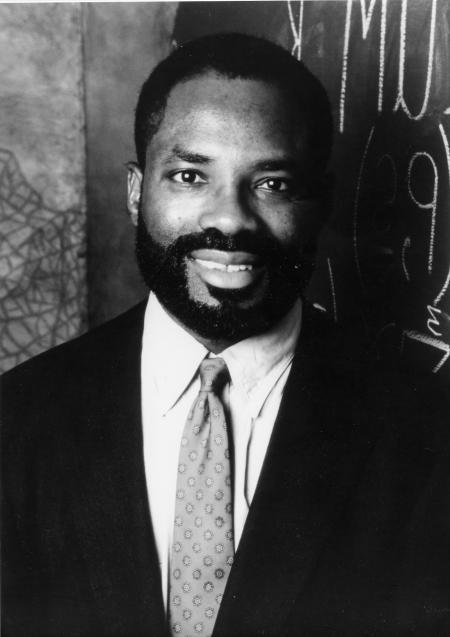
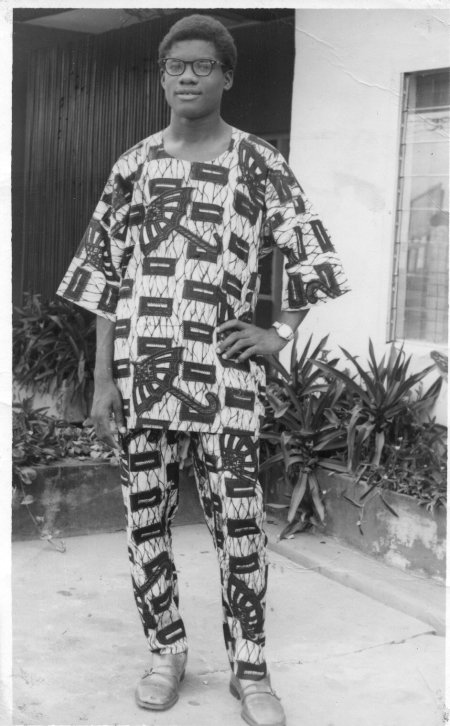
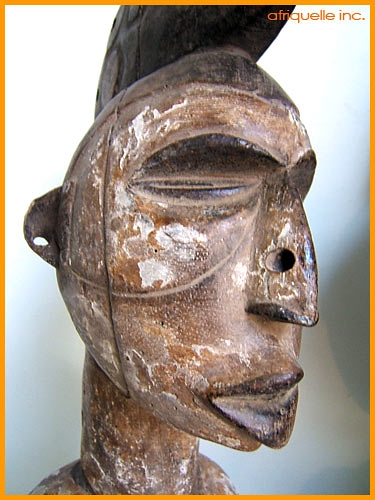
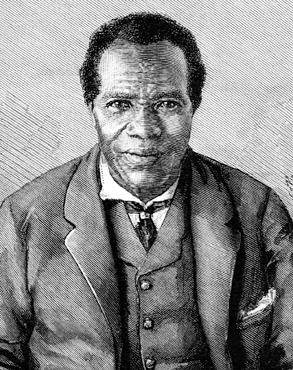
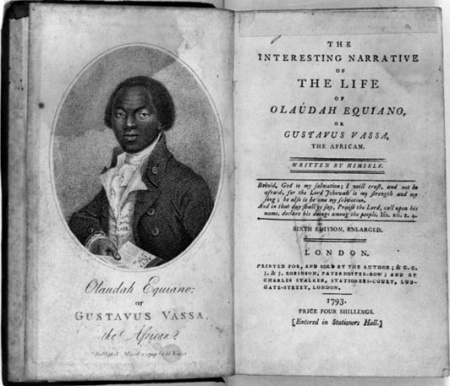
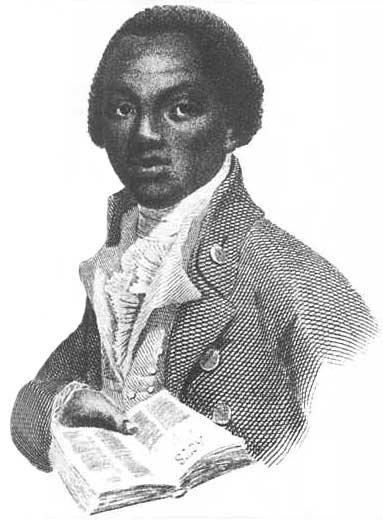
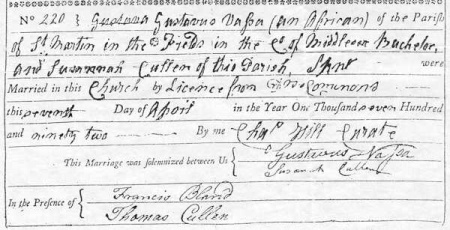
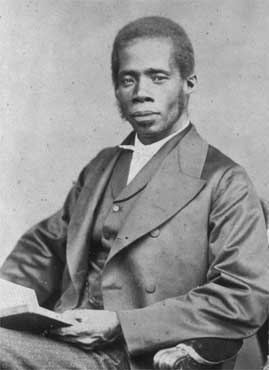
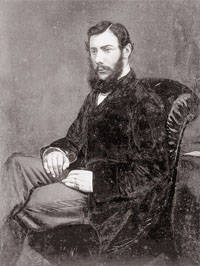
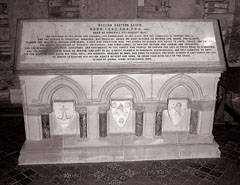
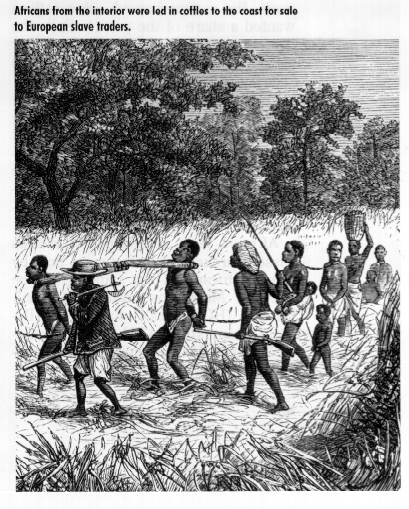
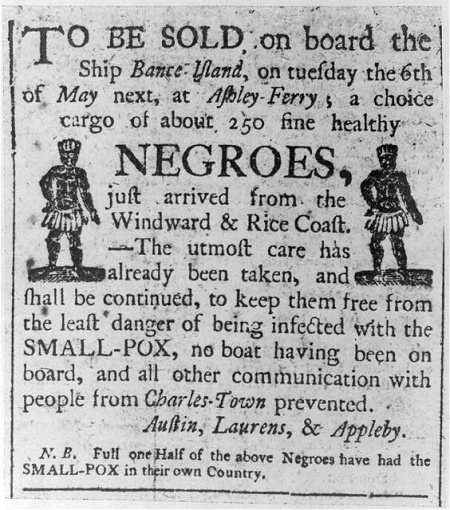
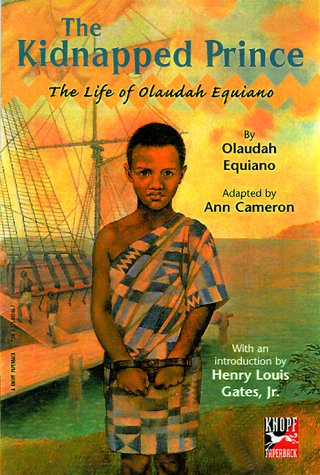
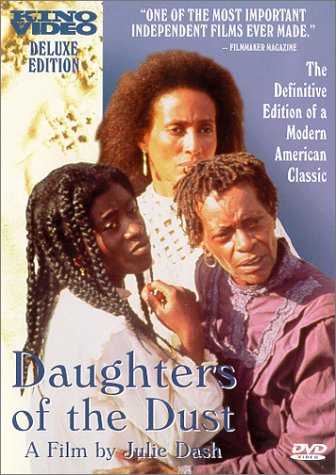
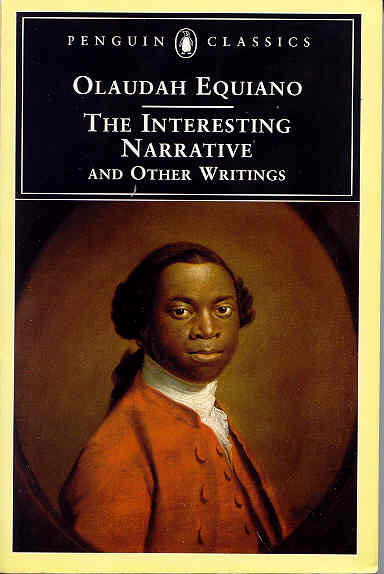
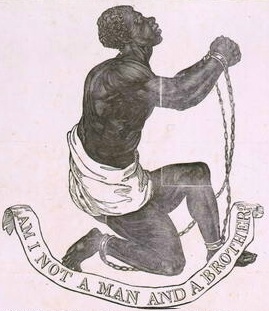
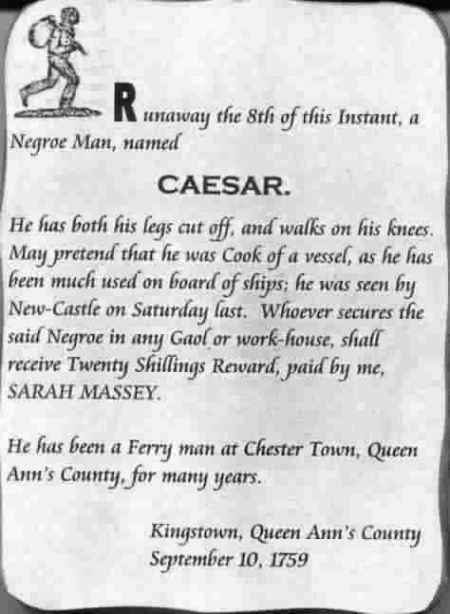
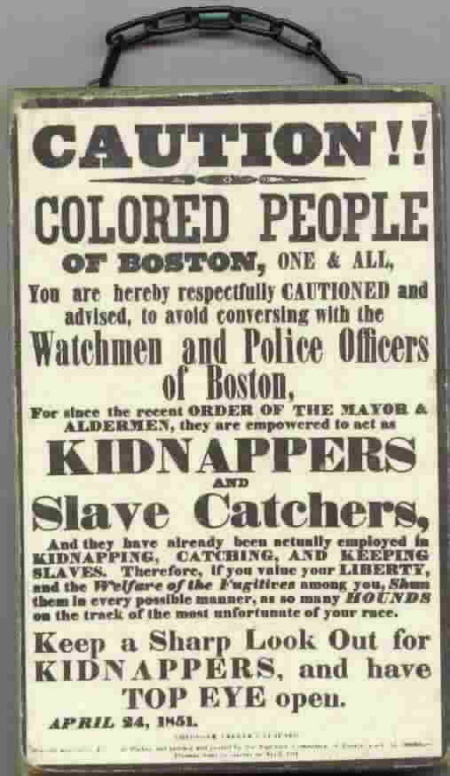
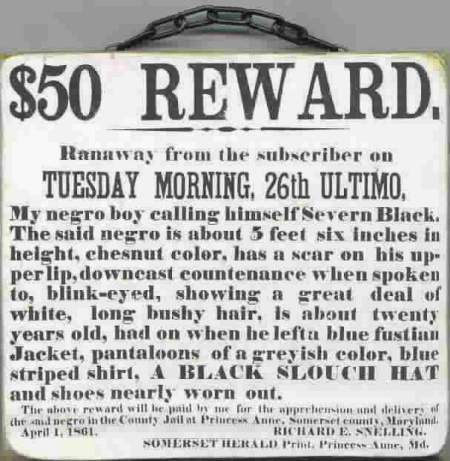
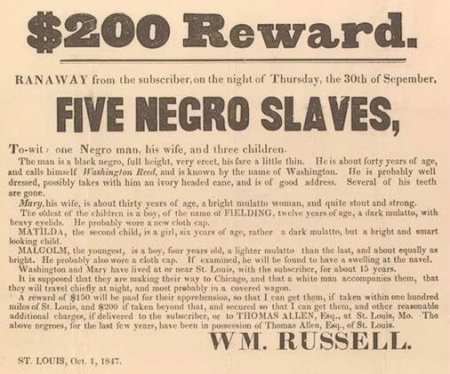

EZE
J.A. NWALOZIE
ezeigbo@europe.com
13.
June 2004
I
, PRAY IF THE IGBOS CAN HAVE MANY OF EMEAGWALIS ,ALTHOUGH, THERE ARE ALOT OF
EMEAGWALIS IN IGBO LAND TODAY,WASTING AWAY DUE TO LACK OF FUNDS TO TAKE THEM UP
.EMEAGWALI, INDEED YOU ARE THE FATHER OF THE INTERNET .
ajuka
hitler
princehitlera@yahoo.com
ebonyistate
11.
June 2004
Hi,
I
love you for you have shown the world that the igbos have stuff that can make
things happen.
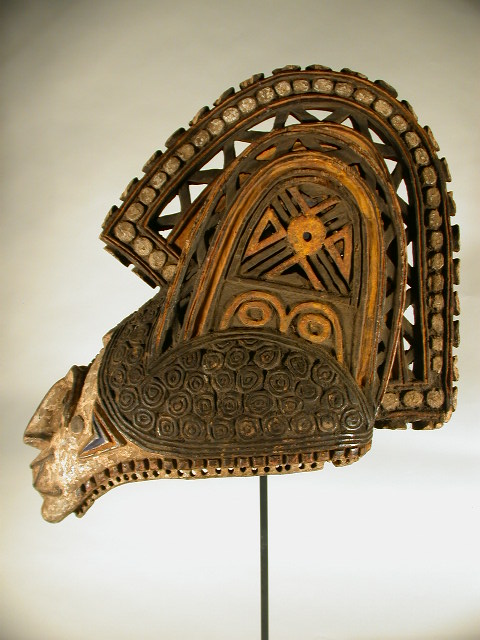
kingsley
nnabuihe
owerri,
11.
June 2004
sir,
i
visit your website everday i go for browsing because, i am very proud to
associate with an icon like you.
you
are a gift to the african and the proud igbos.
God
sent you to be a shining light in our horizon, keep on shining.
Ozo
Ezeanochie Uchenna
uchenna2002@hotmail.com
Location:
30.
May 2004
Please
please please help and plant thousands of emeagwalis in the Igbo nation and
empower Igbo nations children with your specially God given knowledge by investing
massively on the IT industries in no other place in Nigeria/Africa except in
Igbo land. Charity begins at home. Then after the investment, we would extend
the braches of your IT industries to Oduduwa nation our beloved in-laws.
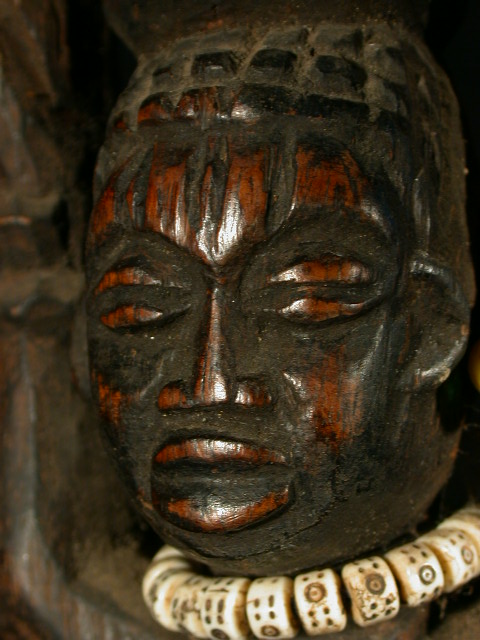
EKWURUKE
HENRY N
ekwuruke@catholicexchange.com
Umuahia,
14.
May 2004
SIR,
I
AM HAPPY FOR YOU AND THE WAY YOU HAVE BEEN SUPPORTING THE IGBO COMMUNITY I GIVE
TO U A MILLOIN EVEN A TRILLION KUDOS,JIDE NKE IJI MAKE NA NKE I JI AMAKA.MY GOD
BLESS,PROTECT AND KEEP YOU FOR US.I AM PROUD OF YOU SIR.I AM EKWURUKE HENRY
NNADOZIE
KENNEDY
kenonline@excite.com
Nnamdi
Azikiwe university Awka
13.
May 2004
its
time to let the world know that given better opportunities ,Africans especially
Igbos will have a place in the scientific and economic development of the
world.african youths have the potentials foe greatness but bad government has
always deprived them of there talent and most end up in main market onisha
bros
we are proud of you
okechukwu
pixykool@yahoo.com
imo
state ,
13
May 2004
I
extol your achievement. I am proud of you. I like reading about you. I love you
as an Igbo, an African-American and the Bill Gates of
I
pray to be like you in my field though better opportunities are not provided
here but God will see me through.
I
love you.
Your
Brother,
Okechukwu
Kennedy Chieme
08035611773
Prayer
Odede
oratiomena@yahoo.com
12
May 2004
It’s
a pity that I never knew of a great mind on my own, but through a foreigner who
told me about my own brother. Well, I rebuked him for calling you
Osondu
Onoh
osolife@ono.com
9
May 2004
I
am so delighted to find a place like this with IGBO trade mark. Sir, you have
succeeded where others failed, you are a complete success.
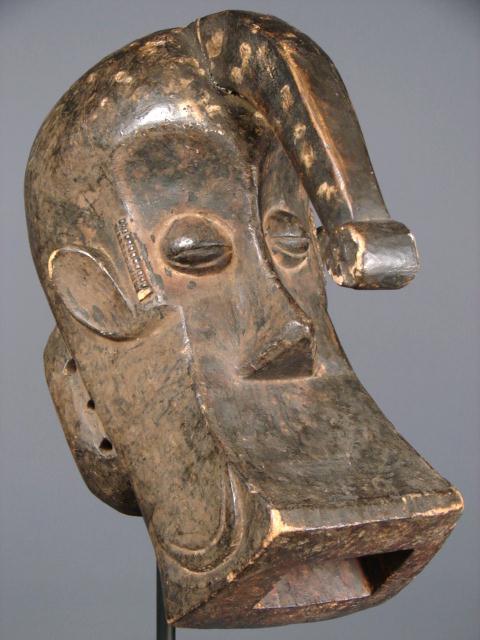
Onyedikachi
Uzoma Ihegworo
kachilithoman@yahoo.com
9.
May 2004
You
are a rare gem and an Emeagwali the great. The blood of igboman is running in
you and I must not fail to thank you immensely for your endeavours to elevate
the Igbo man in such a distant land. Exert yourself more. You still have more
hidden untapped wisdom in the field of science.
Igboanusi
.c. Emeka
meskanyno@yahoo.com
Nigeria/Biafra
5
May 2004
i
am a biafra hip pop rapper, based in
i
want to take up afro hip pop to surport the igbos round the world, i need
Chigbo
Onwelumadu
chigboonwelumadu@yahoo.co.uk
No
4
May 2004
Oh
my dear brother Philip Emeagwali. We are proud of you and God will continue to
bless you.
I
am always happy to see or hear from my kinsmen.
nwizugbo
chijioke victor
vickoko4life@yahoo.com
southwest,
3
May 2004
oops..what
a great achievement.Ndigbos and indeed nigerians are really proud of u. thumbs
up and keep it flowing.
eke
ne m.
OHALETE,
VICTOR EJIKEME
WE'VE
HEARD SO MUCH ABOUT YOU AND YOUR EXPLOITS. MAY GOD BLESS AND KEEP YOU AS YOU
CONTINUE TO BRING ABOUT POSITIVE CHANGES IN THE LIVES OF OTHERS.
Ezigbo
nwa afo, Chukwu gozie gi.
Nwanna
gi,
Ejikemeuwa.
Chimatara
Nicholas-Peterson
angelic17dy@yahoo.com
Bros,
i dey hail u. E no dey easy at all; to go yonder dey make name, in maths/computer
for that matter. Bravo!!!!!!!!!!!!!
i
guess we still get hundreds emeagwali's for this
Ride
on with your intelligent wife
UCHENNA
IKEKPEAZU
I
AM SO HAPPY TO BE ASSOCIATED WITH U AND
Nwankwo
Chigozie Emmanuel
bravotp@yahoo.com
Good
day Prof Philip Emeagwali. I am a regular fan to this great Igbo's son who has
given honour and pride to all Igbo's. May God continue to bless you and all
those who believe in
Nwankwo
Chigozie Emmanuel
chigotp@yahoo.com
More
grease to your elbow Mr. Philip Emeagwali. I am very proud to come from the
Igbo race. You are such a wonderful man. I dream of becoming like you.
It's
my pleasure to call you my idol whom I emulate. God will continue to bless you
and your family and all the Igbo's in the world.
Thanks
Father of Internet.
Kene
Abana
Kenenri@yahoo.com
28.
April 2004
I
congratulate and salute you. You have really proved you are a genius and a
legend of our time.Technology can only be sold or stolen, nobody can transfer
it. I sincerely want you to sell or share your technological abilities to your
Igbo brothers, Nigerians in particulars and
Kene.
Nwimo,
Godwin Chibuzor:
You
are Great. Your site is motivating and challenging.
Highly
inspirational to both young and old.
The
Igbos, Nigerians and the world at large salute you for your contribution to the
development of information technology. Move on. God is in control.
Please
don't forget "The Rising Sun"
Ike
Sam Eneje
seneje@yahoo.co.uk
I
was overwhelmed with joy for that outstanding record to the credit of the black
race.
Emeagwali, jisie ike, chukwu
dube gi nke oma. Ndi Igbo ga ebi, ha ga na-aga n`iru.
NDUKWE,
victor
Victor.Ndukwe@shell.com
P3-013
Please
continue to create wave in the computer world and for the Igbo race.
Ikemba
Eze
Ikemba.Eze@ncr.com
Dear
Philip,
I
read about you, Dale and Ijeoma a few years back and was very pleased about
what I saw. You a truly multi-tasking fellow because the few mails I sent them
asking for your opinion on issues were responded to quite promptly.
Does
Ijeoma have brothers and sisters yet? The Lord should enable you leave the
world more copies of you, especially godly you.
Chukwu bi n'elu goziri Ndi
Igbo nek oma.
Ji sike, nwa nna a!!!
jude
donatus
judonatus2000@yahoo.com
Location:
I
WAS SO HAPPY 4U WHEN I HEARD THE GOOD NEWS ABOUT YOUR ELEVATION AS THE NUMBER
ONE MAN IN THE INTERNET. AT LEAST MAKING NDIGBO AND THE
Chike
Okoroafor
cokoroafor@total.com.ng
I
shed tears of joy to know that we (Nigerians and the Igbo race in particular)
have a gem like you. I am inspired greatly by your life. I wish you all the
best as I keep a tab on your achievements.
Chibueze
Ukwuani
chibueze22@yahoo.com
The
best is yet to come because so many great minds like you are here in the South
East of Nigeria. Please keep the flag flying.
I
make bold to say that your speech at the last Igbo Day celebration in the
Olisa chebe gi!
Akpaenyi
Oluchi
oluchi.akpaenyi@shell.com
Location:
22.
April 2004
Doc,
I
am proud to be associated with you, both as a Nigerian and as 'Onye Igbo'. You
are truly a source of inspiration to us. Your beautiful and equally intelligent
wife, who co-incidentally is a fellow microbiologist, is not left out.
May
the Good Lord continue to bless and uplift your entire family more than you can
ever imagine in Jesus Name - Amen!
Nelson
noge_m2@yahoo.com
Las-gidis,
Naija
Broda,
You have actually proved that, “The strength of a man is propelled by the
determination in his heart.”
We
urge you not to forget HOME! As seasoned "nwa afo" Igbo, "When the wealth gets home, we shall the
maker of the wealth"
Keep
up the good job at all times!
Nwachukwu
Chibuike B.
chibuike.nwachukwu@shell.com
22.
April 2004
Phil,
you have proven that Igbos are born
genius
blessed by the ALMIGHTY. That if we Igbos are given equal chance and
opportunity both in academics and economics conditions many more scientist of
high esteem shall be produced.
Congratulations.
Chidozie
Nwangwa
ladozie2000@yahoo.com
Dear
Mr. Emeagwali:
It
gives me great joy that a Nigerian, an
Igbo
man for that matter is making waves
in
the world of science. We Igbos back home
salute
u and urge u 2 keep up d good work. God bless u.
Francis
Ekene Nworah
kensco4real@yahoo.co.uk
20.
April 2004
I
am Francis Nworah, a Nigerian from Umbele Awka South LGA in
I
say a very big KUDOS to you and to many others like you wherever they are. I
applaud you for the gift of knowledge been given to you by God to accomplished
what lead to your nick-named as “A Father of The Internet” as read in CNN dated February 9, 2001 Web posted
at: 3:43 PM EST(2043 GMT) after been affirmed by the white.
We
are very proud of people like you over there, not to those that believe making
it out there must be through a CROOK method which they called “short cut
formula,” but the shortest possible cut formula had already been founded by you
'cos you worked for good towards that. Sir, “The Father of The Internet,” we
also have the zealness to be like you and even do greater things than you've
done to the glory of God to the whole world. However, how can we get this
started? But I still work hard every now and then 'cos of my faith and dream to
be actualised. I know I have a DREAM that MUST come to being.
bonny
chim mbanuba
cbombachem@hotmail.com
Philip
is a rare creature. I thank God he's from Igbo race.
PwStudent
phillycheesesteak980@yahoo.com
Hello,
I
was wondering if anyone on here could help me with some research on the Igbo
tribe. I am a high school student doing a research project about the Igbo. I
was wondering if anyone had pictures from what any of the villages looked like
today, and how the lifestyle and religion changed. My E Mail address is
Phillycheesesteak980 at yahoo.com
Any
information on these subjects would greatly be appreciated. Thank you in
advanced.
fred
sarksstone@yahoo.com
nsukka/nigeria
dear
sir:
am
very happy that this country [
has
intellects like u as a citizen. as a great man and a very good friend of the
ikemba [emeka ojukwu] i would have like the whole igbo race to immortalise him
now he is very much alive. since he is a leaving legend.
we
the new generation only hear of him as a myth and think the he only existed in the
imagination of our parent's. dear sir, a person of the caliber of the ikemba
should’ve been adviced to open a center of intellectual learning so as to
impact a sense of communal altriustic believe in we the growing generations
from this part of the world.
u
see it pains my heart when ever i hear over the mass media that this legend of
us invloved himself with the project of re-building nigeria, thru the white
elephant presidential election that was held over the country one begins to
wonder if this man has really lost his sense of hindsight which he was noted
for.
as
a lay man myself i saw the out come of the election six months b4 it even was
held and to hear that a man of his caliber entangled himself with such macabre
election really made my heart bleed.
as
far as am concerned the
Kelechi
Obiagwu
kay4u202@yahoo.com
My
father brought me to your site and your achievements have further inspired me.
I am more inspired knowing that you are an Igbo man and I share a common
ancestry with you. I will visit again and again and again and again....
Larry
Mmemee Nwokoye
larrydekingmails@yahoo.com
Biafran
home-coal city
Prof,
You
are great, you have shown to the world that Igbos are really from the east, the
domain of scientific evaluations.
It
is very clear as every Nigerian can see what is going on in NNEWI, THE BIAFRAN
EMEGWALI,
KEEP THE FLAG FLYING AS THE SUN RISES TO SHINE IN
Chukwuka
Okoye
morokoye17@yahoo.com
Oraukwu,
I
never knew you would be interested in the Nigerian/Igbo cause. I used to think
you were just a computer guru. Cheers.
IKE
CHRISTIAN
IKEIC@HOTMAIL.COM
PROF,
GOOD
JOB, AN EMBODIMENT OF THE IGBO INGENUITY,
WE
ARE PROUD OF YOU!!!!
kenkwo
stanic2004@yahoo.com
I
thank u Sir for the things u`re doing. In fact, u have us proud we the black
especially we the igbos in nigeria and the Biafran land as hole we say may God
bless u and u`re family amen.
muniru
oladele idris
idris_oladele@hotmail.com
agege,
Some
are born great, some achieve greatness, some have geatness trust upon them. And
also, great men are known for their works.
Although,
I am not an igbo i appreciate your success. In fact, I am really envying you
and i hope i could come out with something like you did. I used to regret being
a Nigerian sometimes but with an emeagwali i am relief.
However,
I have not seen much of you and your works in your country. WHY. It is
baffling. I think it is hightime you think of how you and your talent could
affect a lay man in
YOU
ARE GOOD. YOU ARE GREAT. YOU ARE A NIGERIAN NOT AN IBO.
Meche
lordmeche@hotmail.com
I'm
taking time to study your website and indeed i found it very informative and
educative. I'm happy that the civil war did not eat you, who would have thought
an "IGBO" would become somebody on earth after three years of
fighting with bare hands to defend out mother/fatherland. after going through
the genocide page in www.biafraland.com, i was very much concerned about the
wickness of our enemies. you would have been of those massacred but
"CHUKWU" God kept you knowing the better part of your life from the
beginning. I am happy that you have not forgotten who and where you come from
"
Dr.,
the world is yet to see the best of you and “IGBOS” at large for God has chosen
the foolish things of this world to the detriment of the wise. we fight for the
independence of NDI IGBO. Our lives we owe ourselves and the generation to come
will extol our selfless effort. "Meche NA-ASI GI NDEEWO"
CHINAZO
OFFOREKWE:
Abum
ofu onye na ndi so na alu ogua iji hu na anyi nwere onwe anyi.ejim nwa obere
ogea na asi gi jisie ike na olu ina alu. akam bukwa nwannegi nime MASSOB. Abum
CHINAZO OFFOREKWE.
CHINAZO
OFFOREKWE:
Abum ofu onye na ndi so na
alu ogua iji hu na anyi nwere onwe anyi.ejim nwa obere ogea na asi gi jisie ike
na olu ina alu. akam bukwa nwannegi nime MASSOB.Abum CHINAZO OFFOREKWE.
Njoku
Sunny Anayo
sunnystyles007@yahoo.fr
Dear
big bros,
I
am realy proud of you as an Igbo man. Pls. keep it on! And kindly take a look
at the situations of the Igbos, and pls do something. If possible give us what
Ikemba nnewi could not give us. And i will be very happy. We are all behind you
big bros.
Anayo
Hyginus Ozoemena
anayo_nna@hotmail.com
Hello
Phillip,
You
are a big brother and a source of inspiration. You are the relic of what the phenomenon
“IGBO” stood for prior to the Nigerian civil war.
Despite
all the setbacks faced by Igbos, I want to remind you and all others that we
should remain proud and humble because we haven't delivered our God-sent
message to the world.
Though
it might be difficult but could be possible, I long for the day I myself and
millions of our youths will hear and act like you in the spirit of the
propagation of Igbo culture to the outside world.
I
thank you immensily for what you have done so far and urge millions of others
to follow EMEAGWALI'S footstep.
Thank
you,
Anayo
Udeh
Augustine Chukwudinka
realaustyn1@yahoo.com
I
am proud of you, you made me proud of my identity as a black man, an African, a
Nigerian and above all my Igbo identity.
I
wish I could use the little I have to impact much like you.
Omanukkwue
Stanley
synkol20@yahoo.com
Akwa
I
thank God, for having such a person from
chikwendu
kennedy
chikwenduk@yahoo.co.uk
lagos/dubai
since
awolowo and his nigerian cohorts failed in their plan to subject the igbos to
perpetual slavery after the civil war, it is obvious that the reverse will be
the case in no time.
Anyabolu
Cosmas
cosmasanyabolu@yahoo.co.uk
Bayelsa
state,
When
a friend told me that an Igboman was named the most intelligent man in the
world I did not believe him until I read about you.
Keep
it up big brother.
frank
okasili
frankiebestman@yahoo.com
Emeagwali,
I
am an Igbo guy that is very proud of you. Most importantly, I am from Anambra
state. I would like to know whether you`re aware of all the madness we`ve
experiencing in the state. How soon are we gonna realize our dream "
Thank
you & GOD bless.
Regards,
Frank
Meche
lordmeche@hotmail.com
Igbo bu “EZE!” Hail the great Igboman, a renown scientist,
hope for the black heritage, we are proud of you.
Chikere
Ezeh
chikere@chikere.com
In
my opinion you are the greatest living Igbo man and should serve as an
inspiration to us all. When we look out we see little or no hope in our
community. However coming to your web site has given me a rare sense of
belonging and pride. God bless you Sir.
JOHN
ERONDU
erojon@yahoo.com
Dear
brother,
In
fact,
benny
bennyguytech@yahoo.com
Asaba,
Delta state,
happy
xmas and a fruitful new year to Prof Emeagwali.
there
are so many opportunities here in
-----------------------
Ngozi
ng4ubesie@yahoo.c:
It's
a welcome development.I just hope we continue to improve because other
countries are now using imasat m.
-----------------------
floxy:
We
the Igbo's happy 2 have u as our brother."Jidekwa nke iji" We pray 4
leo-anthony
badboytony1@hotmail.com
Dear,
you are a role model to us, young africans and nigerians in particular, as a
young student, i want to read computer and nuclear engineering, i am taking you
as my personal model role. It makes me feel proud of being not only black, nigerian
but an igbo like you. i think our government should be working with people like
you. if you can, pls do drop me some few words of encouragement, or maybe
advice on how and what best to do that will help me in my field of education.
finally. (Nwanne jisie ike, we are
proud of you).
Fapohunda,
Ayodeji Oluwasola
ayromeo974@yahoo.com
Ijan
- Ekiti,
A
lot has been heard and said about you. I did not that you have a web site like
this until a friend mail your web site to me.
Hardly
in Nigeria of today can find a man of high profile like claiming such
inheritance you have proved from all reason doubt that you from. Apart from
international scene back home here many are ashame disclosing their identity.
There is still this norm in Igbo land which I do not really think it suppose to
be that is the OUTCAST phenomenon that is so paramont in their culture. If I
may ask is it suppose to like that, since we are coping western religion or
should we copy 75% of their against 25% of ours?
Also,
I will like to know the your effort in making a brighter future for upcoming
children in the field of technology, going by what I read on your web site that
"But what I want to say to you is there is another Philip Emeagwali -- or
hundreds of them -- or thousands of them -- growing up in Nigeria today. I
thought about it when I was driving in from the airport and then driving around
to my appointments, looking into the face of children. You never know what
potential is in their mind and in their heart; what imagination they have; what
they have already thought of and dreamed of that may be locked in because they
don't have the means to take it out...."
In
my own veiw, if this true I think something needs to be done and done very
urgently.
emmanuel
emenike
ekemenike@yahoo.co.uk
The
accomplishments of Philip Emeagwali make me feel very proud of my heritage as Igbo
person. I do really admire Philip a lot as well as the equally brilliant and
pretty wife. My first son is desiring to accomplish as much as Philip and I downloaded
information from this website to inspire him. At 15, he is already in the
university studying information technology. He came out with A1 in mathematics
and I believe he would surpass his role model Philip the way he is going. My
advise for Philip is to try to do something for his native Igbo race to leave
indelible footprints in the land. Best wishes.
Ofomata
somadina
summerjamers@yahoo.com
Emeagwali
is a living genius, he has made the black race happy as well as the igbo's in
diaspora cus the igbo's as we all know are hard working and focused people, this
is the type of people Nigeria needs, an educationist, scientist and an orator
who knows where he was heading to and where he came from. Big brother a giant
kudos to you, you made us proud. Ride on.
Enyi
Patrick Enyi
e_p_enyi@yahoo.com
I
am truly proud of you. God enabled you to overcome the obstacle of tribal
hatred, enthronement of mediocrity and preference of family affinity to merit
to bring out in you what is endowed in most Igbos of our time. For those of us
who are not lucky enough to evade the shackles of enslavement and backwardness
called
Enyi
Robert
Ajani
robertajani@hotmail.com
Hello,
I
have never met you personally, but it´s irrelevant here. I never got to know
Achebe and Soyinka until recently. I got to know about you yesterday night
while giving a lecture at a university in Muenster (Germany) and a Nigerian
medical student challenged me that l didn´t include you among our greats. I am
sorry about that. Congratulations on all these achievements. These achievements
go beyond Igbo,
Aneke
Jude Izuchukwu
judeaneke@yahoo.co.uk
am
proud to be an african and most especially from the igbo tribe of
best
wishes
jude
Onyii
Nwosu
ebonyblack002@yahoo.com
Thanks
Prof. Phil for u are quite an inspiration to me a poor Nigerian Igbo youth. I
shall try as hard as possible to be someone greater.Though our environment
ain't encouraging us and the university system here is messed up, I still
believe that success is the thing of the mind. Thanks Phil.
OBI
chinedu
yvwa123@yahoo.com
sir,
you are so wonderful and you have brought the igbo race to the limelight. but
sir i would really need your help in this my project. i have a project to write
a programm that can recover data from crashed hard disk using visual c++ i
would be grateful if you are of great help. thanks and God bless
S.
Wright Onyemenem
sunnywright2000@yahoo.co.uk
i
was thrilled when I read on a newspaper here in
I
feel like flying when I found out that the idea of this universal great
internet was from one of my brother not just an African, not just a Nigerian but
an Igbo man.
ejike
chukwunonso chidiebele
ejikecc@yahoo.com
The
Igbo will rise up to their right, and take that which belongs to them. Our
people to return to our culture as material wealth will always rot away, but
intellect never fades.
divine
nwoye tobechukwu
divine4@naijanet.com
hi
brother
i,m
writing from
what
is happening with the igbo on the issue of politics, there are always divided. are
there not seeing the dormination happening in
Mazi
Sabinus O. Ezeoke
akemeuno2000@yahoo.com
Akeme-Uno
/Arondizuogu
This
your much-needed guestbook will help the Igbo people to know the role of ICTs
in this 21st century. That with ICTs life will be better for men and women to
achieve most of their life aims.
As
you live in a knowlegde-based society (
Finally,
we at home are carring the crusade to the ouside world to come to our rescure
because we are law-abiding race.
Keep
it on!
Sam
Odiaka
scodiaka@oraifite.com
London-UK
Dr.
Philip Emeagwali is a great man for the whole human race. The Oraifite
Community Town Igbo Land of African American Shopping Market Store sites would
like to say "Dr Emeagwali is a Jewel of Africa"
Success
to You,
Sam
Odiaka
thank
u for making
u
are te proud of igbo man.
please
try and help other igbo to actualise their aim .
thank
u
IGBO
By OBU UDEOZO,
According to
Chinua Achebe,
“Udeozo’s
poetry comes to us hot from the foundry of his restless imagination.
He
is a natural poet ready to take on any subject that touches his people.
We
shall hear of him more and more in the years ahead.”
Igbo
is excerpted from Cyclone - an anthology
of poems
shortlisted for the 2005
Nigeria LNG literature prize.
the earth
vanished into a pin-hole;
I am soaked with songs...
My ancestry’s
sharp beauty baptized me
at the forest’s nipple
-
a pilgrim of delicious peace.
Igbo
space-shuttle
and speech
your
civilisation flowers
in
every face of earth
yet your offspring
hide in the toilets
of foreign tongues
your offspring
bury your sharp beauty
with the inferiority of mad English.
mystic damsel
I shiver
in your tabernacle’s splendour
beyond Bill Gates and microchips,
you fathered supercomputer’s Emeagwali
- a vapour in the ocean
of your maltreated genius.
mystery’s powdered face
succumbs to insight
we must rescue
our lone baby from oblivion’s fire
we must re-plant
our fingerprint
against the monologue of English,
resurrection
awaits those
who drink from our roots
not our suicidal love of foreign
gods.
-
by Obu Udeozo.[MSOffice21]